
Permaculture is more than a gardening method—it’s a way to design a resilient, self-sustaining homestead that works with nature instead of against it. Even those with backgrounds in agriculture are often unfamiliar with its principles. This article shares my passion for permaculture and encourages you to explore its transformative potential.
I am deeply passionate about how permaculture principles can transform a homestead into a thriving, self-sustaining ecosystem. My goal here isn’t to lecture, but to share that passion and hopefully inspire you to explore permaculture more deeply for yourself.
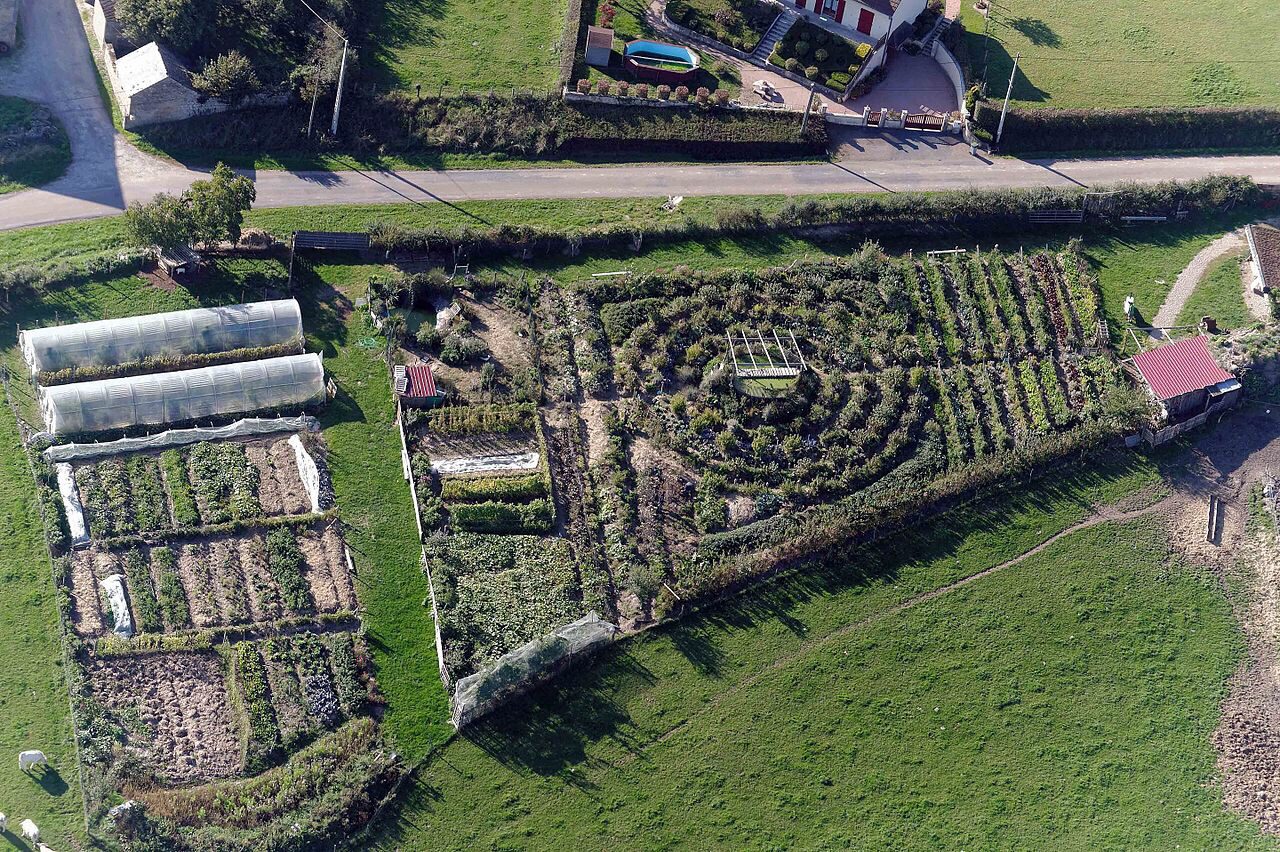
When I first came across this term, I had just started my very first raised bed garden and barely knew a thing. But the idea appealed to me instantly and I became obsessed with studying and applying as many of these concepts as possible. At first, everything I read was so overwhelming, I thought you needed to either be a Chemist, Biologist, or Botanist to understand how to make it work. But there are so many simple ways to get started.
If you implement it correctly, permaculture principles can decrease your work load, make your garden more productive, make your animals healthier, and generally improve all the systems on your farm or homestead. But it doesn’t stop there . . . It also encompasses social, financial, spiritual, and global environmental networks.
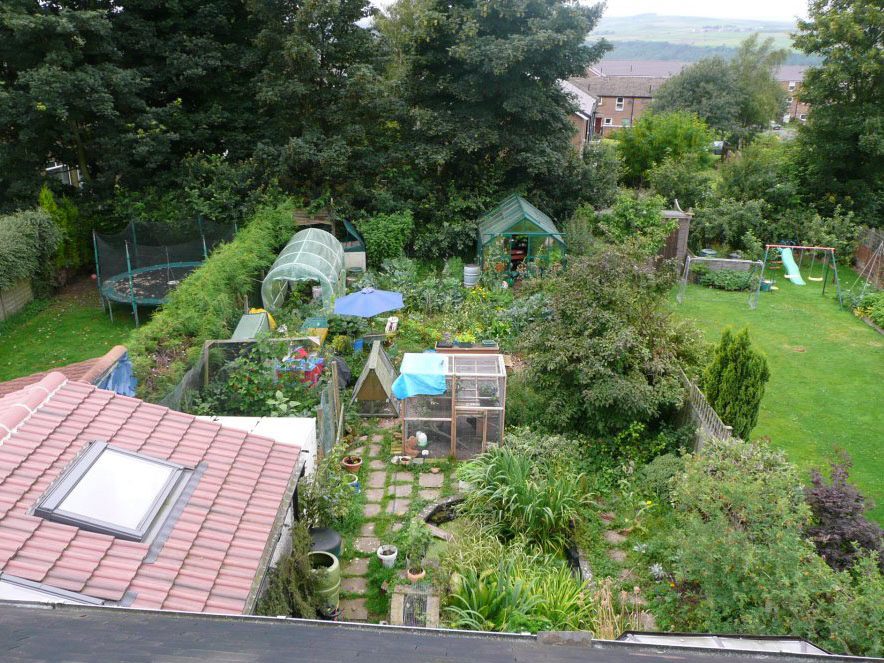
What is Permaculture?
The goal in permaculture is to create a mini ecosystem. Everything is connected to and supports everything else.
Permaculture is a holistic design approach that mimics the patterns and relationships found in natural ecosystems. The goal isn’t just to grow plants—it’s to create a self-sustaining mini ecosystem where every element is interconnected and serves a purpose. Plants, animals, soil, water, and even human activity work together in balance, each supporting and benefiting the others.
On a homestead, this might look like using kitchen scraps to feed chickens, whose manure enriches the soil, which then nourishes the garden that produces more food—creating a continuous, regenerative cycle. At its heart, permaculture is about designing systems that require less outside input, waste nothing, and grow stronger and more resilient over time.

There are 12 principles of permaculture:
1. Observe and interact
Every successful permaculture design begins with observation. Spend time studying your homestead — the lay of the land, soil types, sun and shade patterns, water flow, and local weather conditions. Notice how wildlife interacts with your space and how plants respond in different microclimates. The more you observe and engage with your land before acting, the better you’ll understand how to work with nature rather than against it. Observation is the foundation for every smart design choice you’ll make.
2. Catch and Store Energy
In permaculture, energy means more than electricity—it’s water, sunlight, nutrients, and even food. Designing systems to catch and store these resources helps your homestead thrive with less outside input. Rainwater harvesting can reduce dependence on municipal water, passive solar design can heat your home naturally, and preserving your garden harvest captures seasonal abundance for year-round use. By learning to store energy in all its forms, you create resilience and self-sufficiency.
3. Obtain a yield
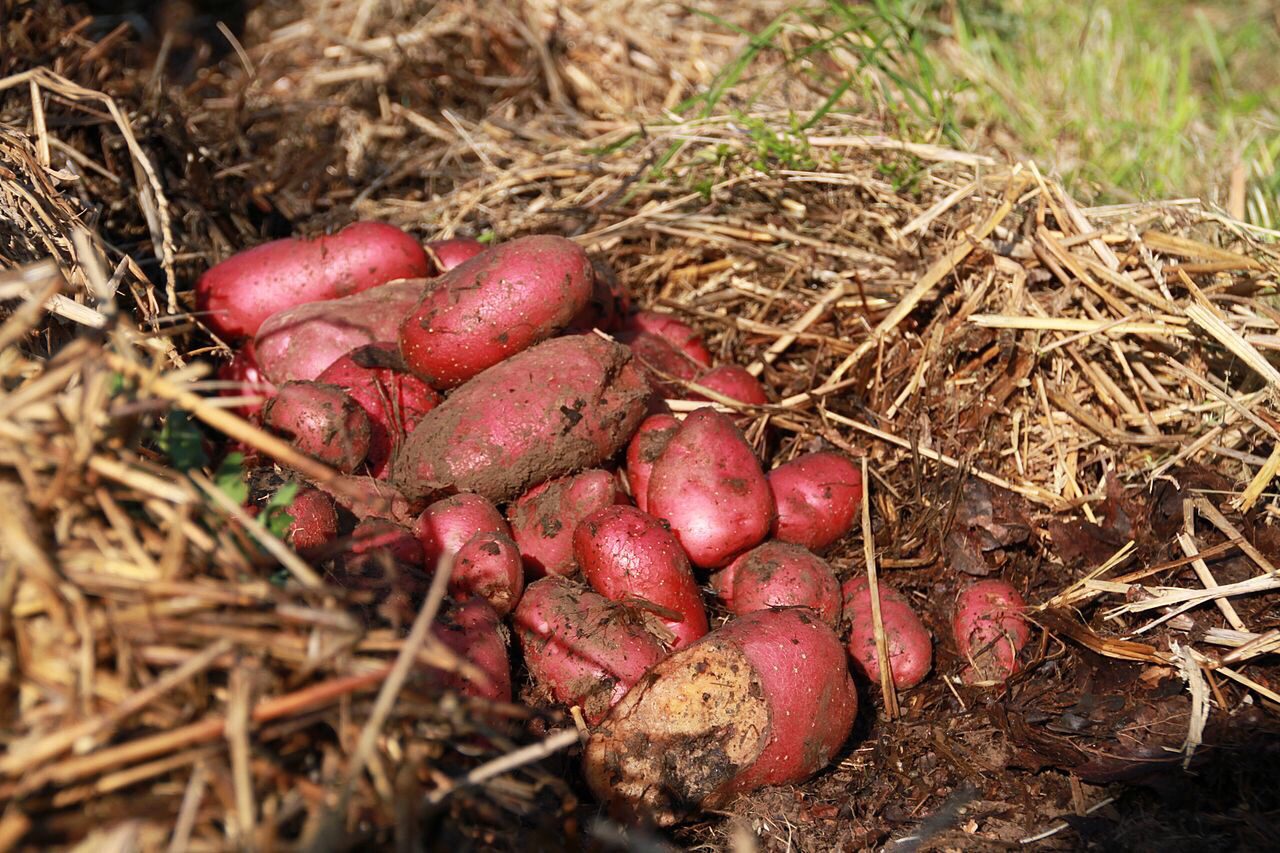
A permaculture system should always provide a return — whether that’s fresh vegetables, fruit, firewood, seeds, or even knowledge and community. Obtaining a yield reminds us that our efforts should sustain us both now and in the future. As your system matures, yields can become increasingly diverse: from honey produced by bees pollinating your garden to compost rich with nutrients that feeds next year’s crops. Every yield, big or small, contributes to a thriving homestead.
4. Apply Self-regulation and Respond to Feedback
Nature is constantly giving us feedback—and successful permaculture practitioners pay attention. If your soil is depleted, improve it with compost and cover crops. If a planting area floods, redirect the water or choose species that thrive in wet conditions. Planning for the future by planting perennials, improving soil health, and learning from past mistakes allows your system to evolve and strengthen over time. Reflection and adaptation are vital to building long-term resilience.
5. Use Renewable Resources
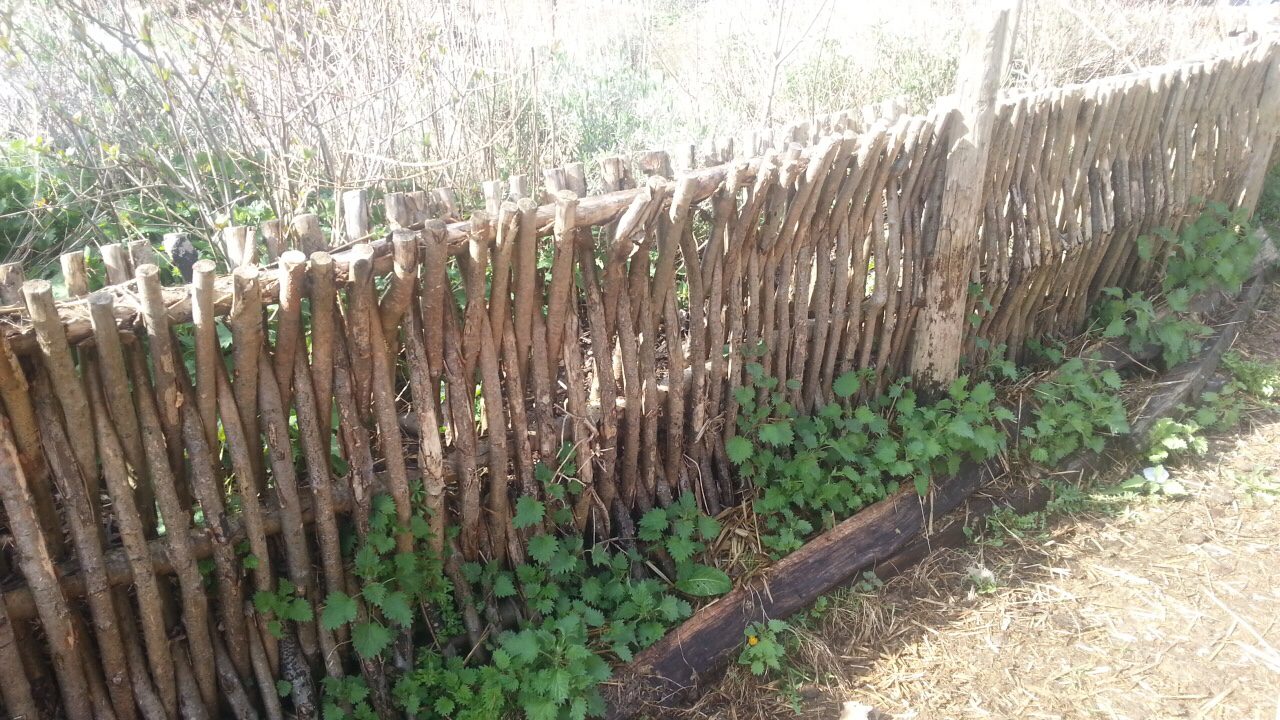
Permaculture emphasizes using resources that regenerate naturally. Save seeds from your vegetables and herbs to plant the next season. Explore coppicing techniques to harvest wood without killing trees. Utilize materials already available on your land — fallen branches for hugelkultur beds, rainwater for irrigation, compost for soil fertility. Recycling and reusing materials not only reduces waste but also strengthens your homestead’s self-reliance and reduces its environmental impact.
6. Produce no waste
In nature, there is no waste — everything has a purpose. Your homestead can follow the same principle. Compost kitchen scraps and garden waste to build nutrient-rich soil. Feed leftovers to chickens or pigs, turning what was once trash into eggs and meat. Consider vermiculture to transform food scraps into high-quality worm castings. When every output becomes an input, you close the loop and create a regenerative system.
7. Design from pattern to details
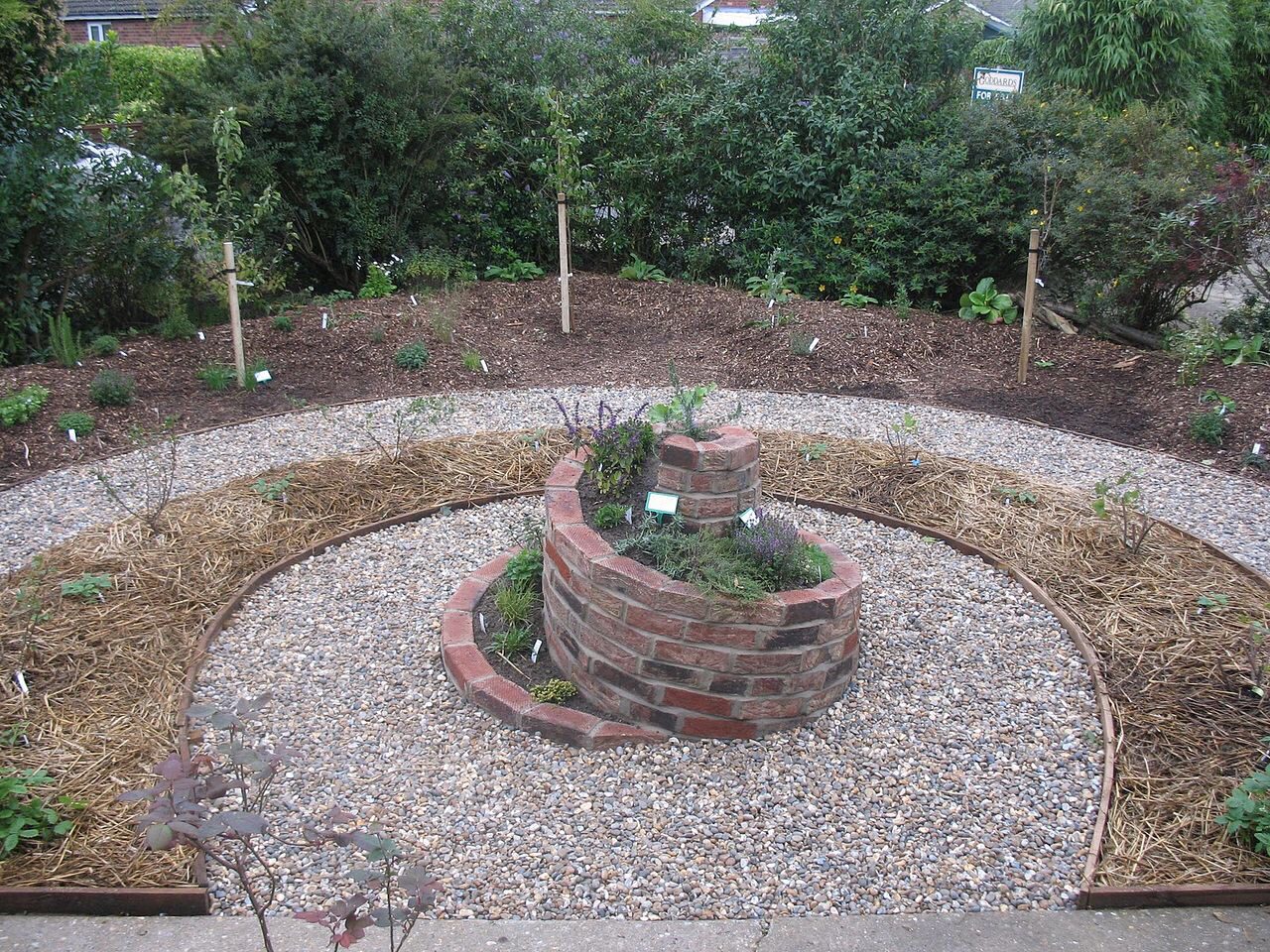
Nature offers endless design inspiration. Look at the branching of rivers, the spiral of a sunflower, or the layered structure of a forest—these natural patterns can guide the layout of your gardens, water systems, and even structures. Start with the big picture—where water flows, how sunlight moves — and then refine the details like plant placement, pathways, and companion planting. Designing from pattern to detail ensures your permaculture system is efficient, functional, and beautiful.
8. Integrate rather than segregate
In a thriving ecosystem, elements don’t exist in isolation—they work together. Permaculture encourages integration, such as planting complementary species side by side (companion planting) or creating plant guilds where trees, shrubs, herbs, and groundcovers support one another. Classic examples include the “Three Sisters”—corn, beans, and squash — which grow stronger together. Integration fosters resilience, reduces pest problems, and increases productivity across your homestead.
9. Use small and slow solutions
Big changes can overwhelm a system, but small, steady improvements build long-term success. Start with manageable projects like a small garden bed or a rain barrel, then expand as your knowledge grows. Remember that some yields, like fruit from newly planted trees, may take years—even a decade—to appear. Patience is essential in permaculture; nature rewards those who work with its rhythms rather than rushing the process.
10. Use and value diversity
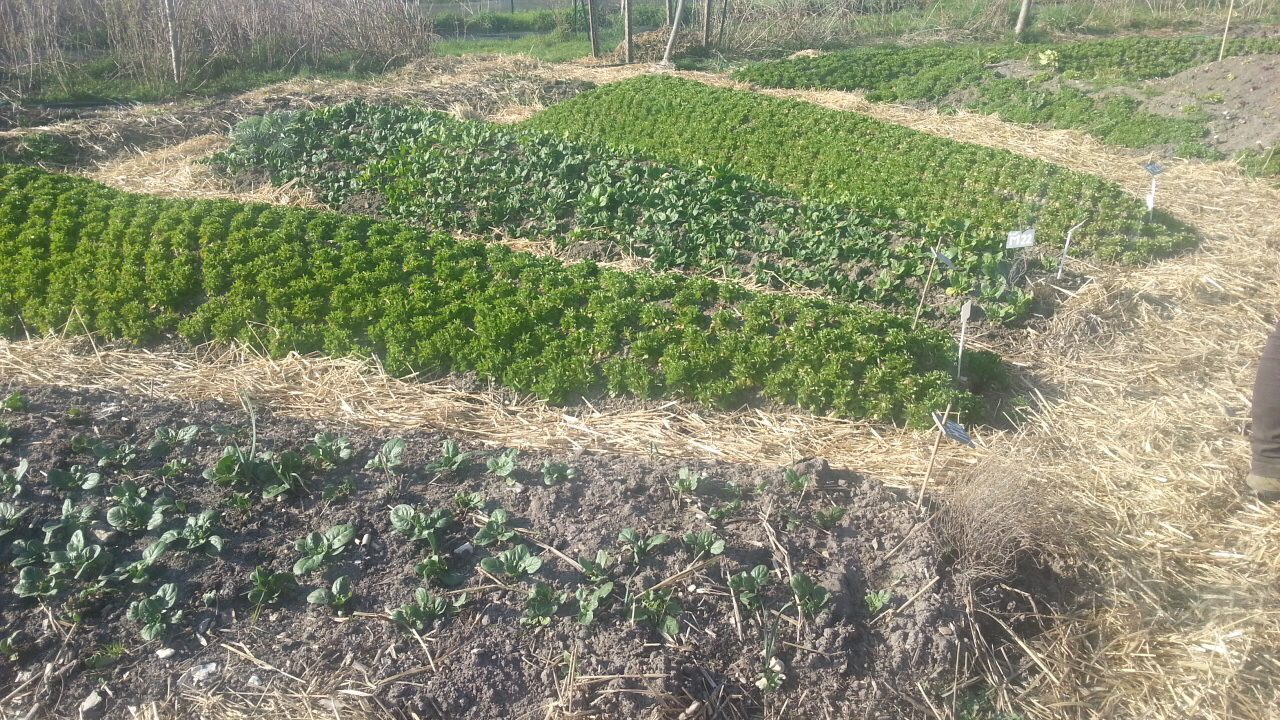
Biodiversity is nature’s insurance policy. A diverse garden or homestead is more resilient to pests, disease, and changing weather conditions. Plant a variety of crops, include native species, and encourage beneficial insects and wildlife. If one crop fails, others will succeed, ensuring you still harvest a yield. Diversity also enriches the ecosystem as a whole, creating a healthier and more balanced environment.
11. Use the edges
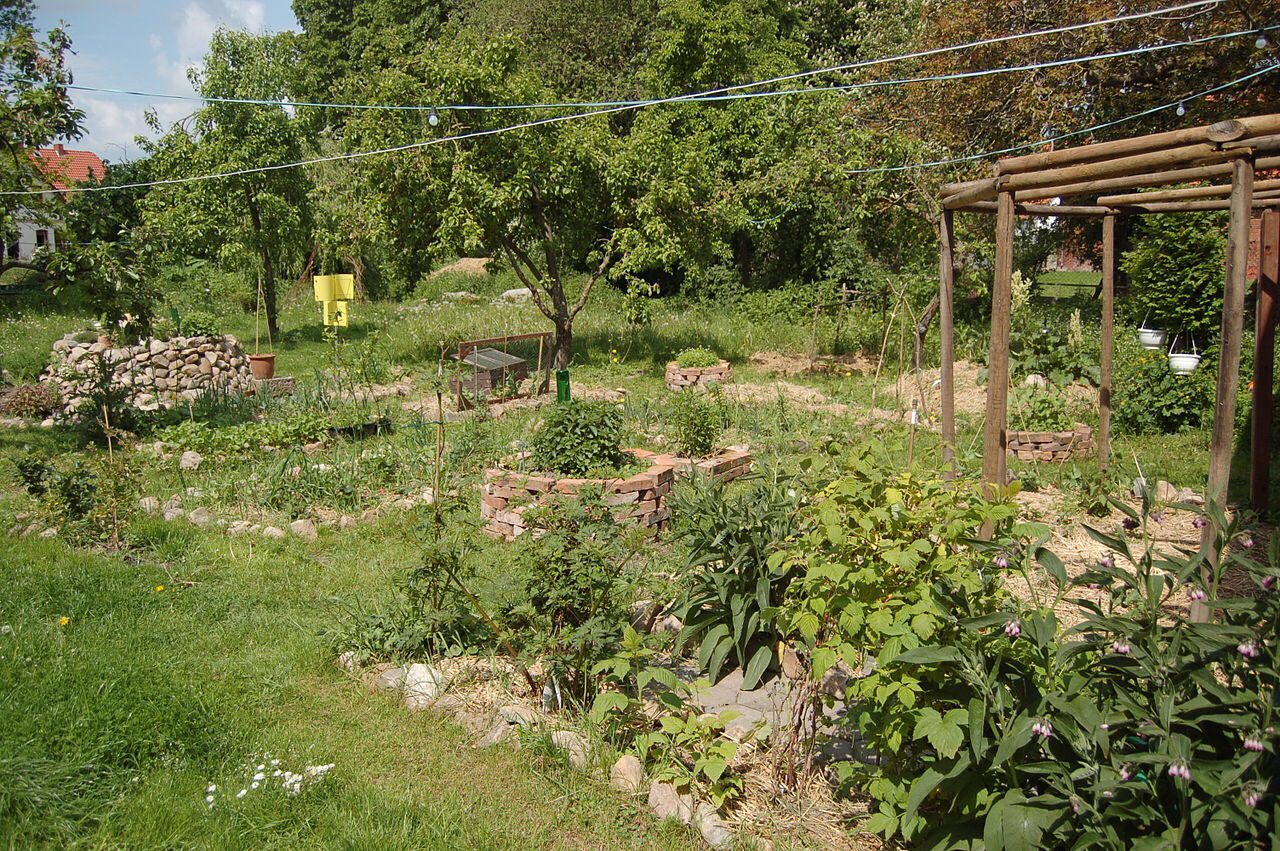
The edges—where forest meets meadow, water meets land, or garden beds meet pathways—are often the most productive and diverse parts of any ecosystem. Permaculture design makes use of these spaces with techniques like keyhole and mandala gardens that maximize growing area and accessibility. Silvopasture, which combines trees with grazing animals, is another way to turn edges into opportunities. Embracing these transitional zones increases abundance and strengthens your system.
12. Creatively use and respond to change
Change is inevitable—weather patterns shift, new pests appear, and ecosystems evolve. Rather than resist change, permaculture teaches us to adapt and work with it. Plant drought-tolerant species during dry seasons, embrace succession planting to extend harvests, or experiment with new techniques when conditions shift. By staying flexible and creative, your homestead will continue to thrive no matter what nature brings.
Plant Guilds and Food Forests
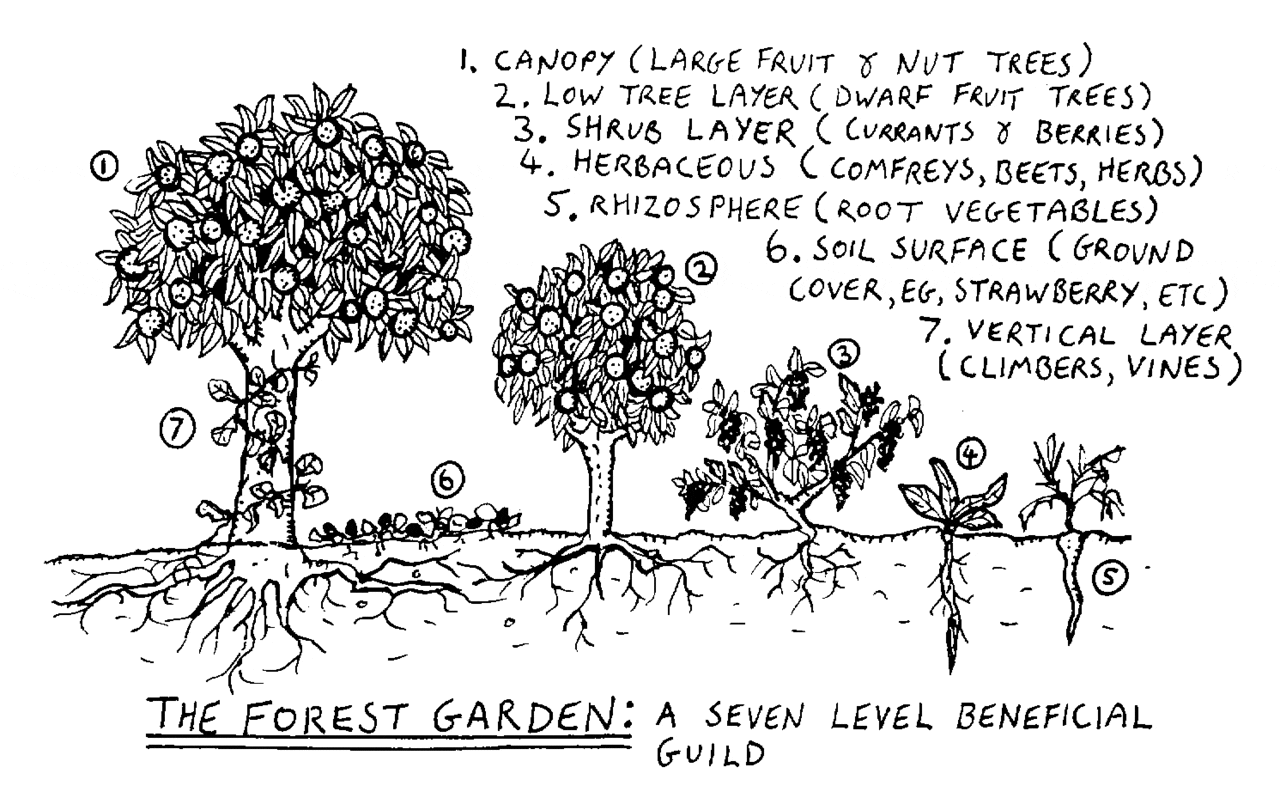
In permaculture, tree and plant guilds are carefully designed plant communities that work together to support the health and productivity of a central species — often a fruit or nut tree. Instead of planting a single tree in isolation, a guild mimics the diversity and interdependence found in natural ecosystems. Each plant in the guild has a specific role that benefits the others, creating a resilient, self-sustaining system that requires less maintenance over time.
A well-designed guild typically includes plants from several key categories:
- Nitrogen Fixers: These plants, such as clover, lupines, or goumi berries, form symbiotic relationships with soil bacteria to convert atmospheric nitrogen into a form plants can use. This naturally enriches the soil, reducing the need for chemical fertilizers.
- Living Mulches: Groundcovers like creeping thyme, yarrow, or white clover act as living mulch, shading the soil to retain moisture, suppressing weeds, and adding organic matter as they decompose. They help maintain a healthy soil structure and reduce the need for frequent watering.
- Nutrient Accumulators: Deep-rooted plants like comfrey, dandelion, or nettles pull minerals from deep in the soil and bring them closer to the surface. When their leaves are cut and used as mulch, those nutrients become available to surrounding plants, boosting the fertility of the entire guild.
- Insect Attractors: Flowers such as calendula, echinacea, or dill draw pollinators and beneficial insects to the area, improving fruit set and helping control pests naturally. By increasing biodiversity, they contribute to a more balanced and resilient ecosystem.
When combined, these elements create a self-sustaining permaculture guild where each plant supports the others, enhancing soil health, water retention, pest control, and yield. Over time, these small ecosystems become nearly self-maintaining and far more productive than monoculture plantings—a perfect example of nature-inspired design at work on the homestead.
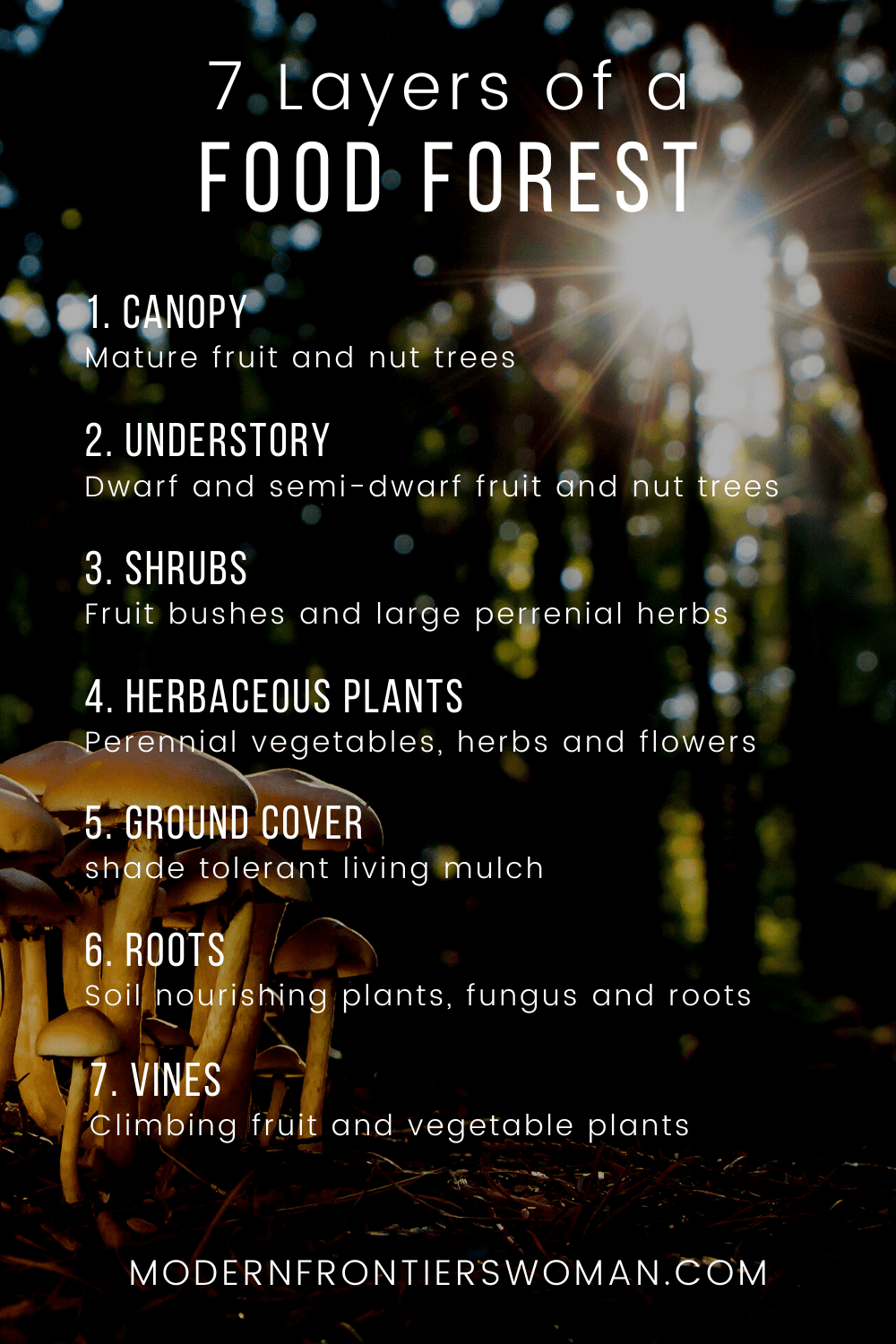
The guilds can be small or extremely large in scale. A larger system is referred to as a food forest and consists of 8 main layers:
- Canopy: Mature fruit and nut trees
- Understory: Small or dwarf trees
- Shrubs: Fruit bushes and large perennial herbs
- Herbaceous plants: Perennial vegetables, fruit, and herbs
- Ground cover: Shade-tolerant living mulch
- Roots: Soil nourishing plants, fungi, and roots
- Vines: Climbing fruit and vegetable plants
Zone Planning
To maximize efficiency on your homestead or farm, plan adjacencies based on zones. Putting most used areas closest to the dwelling and one another.
- Zone 0: The home, kitchen and any space you occupy many times in a day.
- Zone 1: The most used outdoor areas: veggie garden, barn, parking area.
- Zone 2: Areas used once or twice a day: chicken coop, annual crops, grazing areas.
- Zone 3: Areas visited a few times a week: aviary, orchards, mushroom yards, grazing areas.
- Zone 4: Least visited areas that need still need management: wooded areas, forest gardens.
- Zone 5: Wild or unmanaged land, not used for resources in any way.
Permaculture Ideas to Get You Started
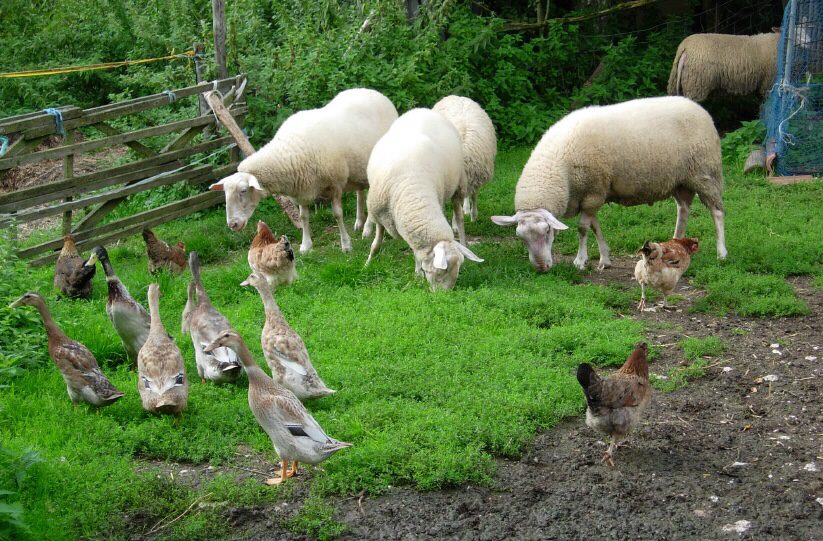
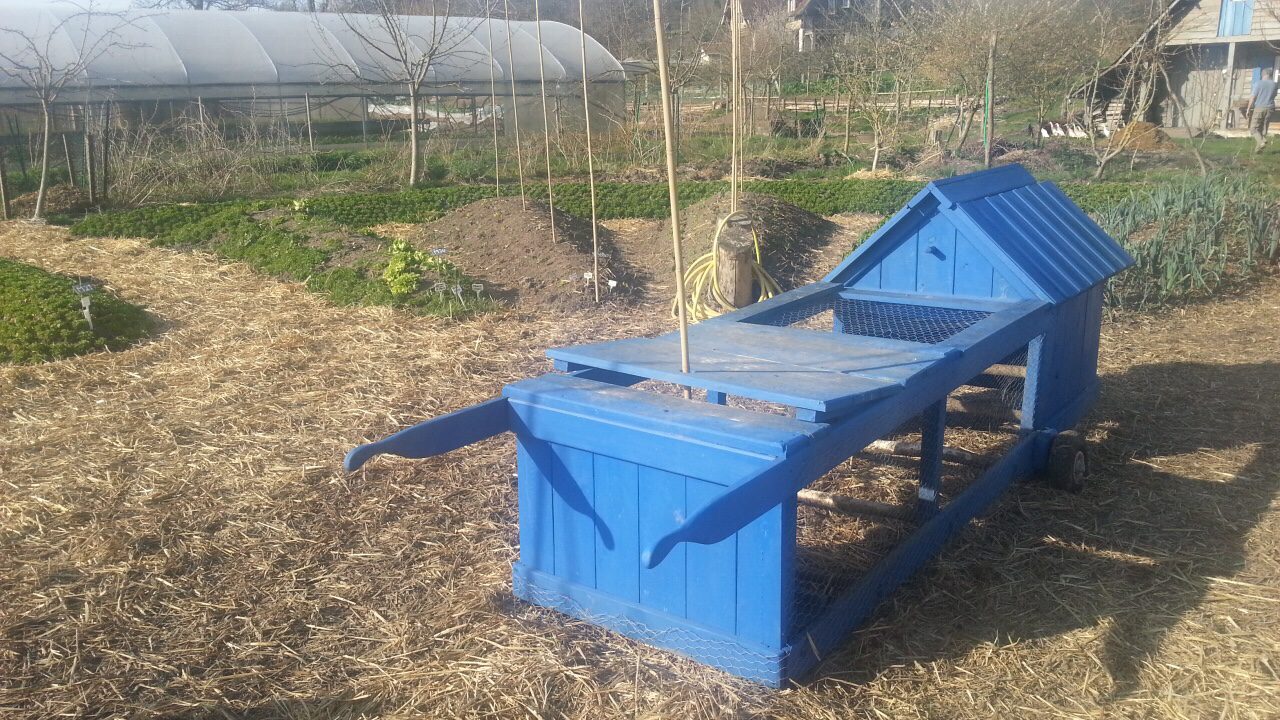
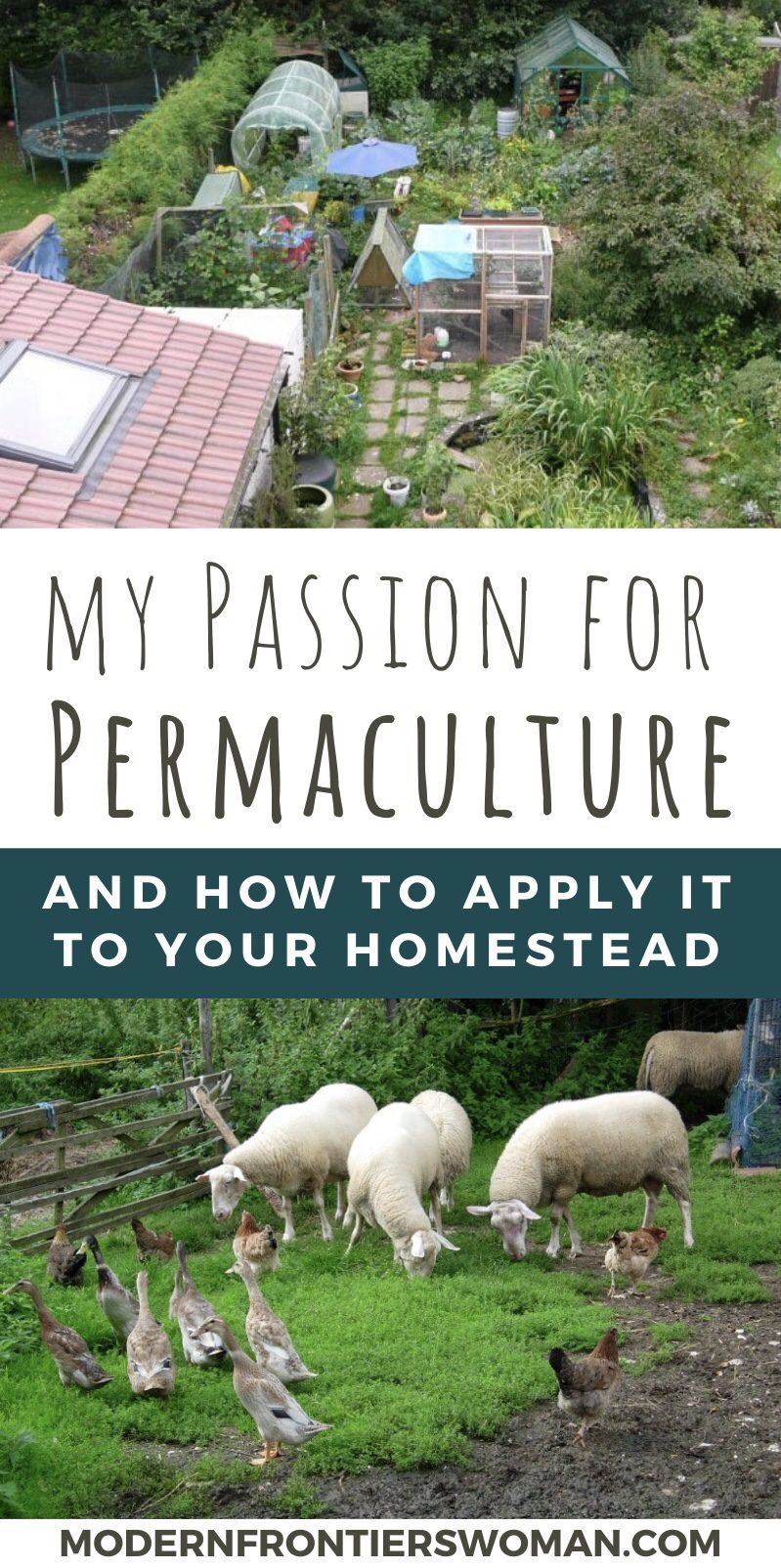
One of the simplest and most effective ways to bring permaculture principles to life on your homestead is by integrating chickens with your garden, compost system, and greenhouse. Instead of treating these elements as separate projects, designing them to work together creates a powerful, low-maintenance ecosystem.
Here’s how:
- Compost Turners: Chickens love to scratch, and their natural behavior does the hard work of turning your compost pile for you. This keeps the compost aerated and speeds up the decomposition process, eliminating a lot of manual labor.
- Greenhouse Helpers: By locating your chicken coop next to or partially inside your greenhouse, the heat they generate can help keep the space warmer during cold months — a clever example of capturing and storing energy.
- Natural Pest Control: Allowing chickens to free-range in the garden (at the right time of year) lets them feast on insects and pests that would otherwise damage your plants, reducing the need for chemical interventions.
- Efficient Layout: Placing the coop, greenhouse, and compost pile close to one another saves you time and energy. These daily chores become easier to manage when everything is located in one functional hub.
This interconnected system is a classic permaculture approach—each element serves multiple purposes, supports the others, and reduces your workload while improving productivity.
Another favorite permaculture idea is using livestock to create rich, fertile garden soil—for free. I’ve done this with pigs, but almost any grazing animal can help.
- Rotate Livestock and Gardens: Fence off a future garden space with cattle panels or other fencing, and allow your animals to graze, root, and fertilize the area for a season. As they go about their daily routine, they naturally till the soil, add organic matter, and prepare the ground for planting.
- Improved Soil, Bigger Yields: Pigs are especially effective because they don’t require much space and their rooting breaks up compacted soil while eliminating unwanted plants. By the time spring arrives, their manure will have decomposed into rich humus, creating ideal growing conditions and dramatically increasing yields. (For more inspiration, check out The Complete Guide to Raising Pigs in Your Backyard.)
- Seasonal Cleanup: If you don’t want livestock roaming in an active garden, you can still put them to work at the end of the growing season. Let them clean up leftover plants and weeds, or simply shovel in their manure to enrich the soil. The key principle here is to work smarter, not harder — designing systems where nature does most of the heavy lifting.
Do you have more ideas? Share them in the comments below to inspire the Modern Frontierswoman community!
Interested in Learning More About Permaculture?
Here are some books I recommend on the subject:
- The Vegetable Gardener’s Guide to Permaculture: Creating an Edible Ecosystem
- Permaculture: Principles and Pathways beyond Sustainability
- The Resilient Farm and Homestead: An Innovative Permaculture and Whole Systems Design Approach
- Permaculture for the Rest of Us: Abundant Living on Less than an Acre
- Restoration Agriculture
If you’re interested in implementing a full scale permaculture farm, check out my design inspiration in the article, Farm Layout Ideas: Site Plan Designs for Your Homestead!
Plan your permaculture garden like a pro with these tools . . .
-
Garden Design and Planning Tool
Original price was: $29.00.$19.00Current price is: $19.00. -

E-Book | Saving Vegetable Seeds
$3.00 -
Fall Gardening Checklist Free Printable
$0.00 -
Succession Planting Schedule Free Printable
$0.00

Subscribe
Explore more garden inspiration . . .
- Unlock the Secrets to a Perfect Garden Layout! (A Reference Tool for Gardeners)
- Farm Layout Ideas: Site Plan Designs for Your Homestead.
- The Comprehensive Guide to Raised Bed Gardening
- Gardening 101: 9 Simple Steps to a Fantastic First Season!
- Chaos Gardening for Perpetual Harvests
- Best Gardening Books: Beginners to Masters
- Building a Climate Victory Garden to Regenerate Soil
- The Bare Soil Dilemma
- The Ultimate Guide to Planting an Herb Garden
- 90 Unique Spices to Grow in Your Herb Garden
- 75+ Side Hustles for Farmers to Boost Income
- Planning a Survival Garden for Food and Medicine
- How to Make a Succession Garden Schedule
- Start your Garden Renovation: Budget and Planning Guide
- How to Build a DIY Outdoor Pizza Oven
- Tips for Garden Critter Control
- The Gardener’s Guide to Pest Insects
- Expert Tips for Gardening Safety
- How to Grow Tomatoes
- 30 Unique Heirloom Vegetables for your Food Garden
- How to Start Seeds Indoors and Keep Them Alive!
- The Secret World of Seeds: Ancient Knowledge
- How to Grow a Medicinal Tea Garden (Plus over 40 Plants!)
- Top 20 Flowers for a Cottage Garden
- 20 Perennial Flowers that Bloom all Summer
- Wildflower Cottage Garden Design
- 12 Culinary Herbs for the Flower Garden
- Learn to Pressure Can Veggies!
- 8 Ways to Preserve Your Harvest
- How to Harvest, Dry and Cure Cilantro
- Companion Planting: Cracking the Code
- Plant Friend or Foe: Companion Planting in the Vegetable Garden
- Most Wished for Gardening Accessories!
- Veggie Garden Supply List
Share this Post on Social Media!
For more inspiration, follow my Pinterest Board: Gardening, Growing Food, Landscaping.

How much land do you have?. I keep reading these articles about people having animals on tiny lots. It’s not doable for many reasons. The health of the animals and everyone around you. Ideas are great, reality is something else. I will respectly disagree unless you have an actual farm. I did. The workload for all this is well beyond what most people could ever handle. Not realistic at all. My husband and I built our entire farm and lived off grid for 20 years.
We have 10 acres which is partial forest and raise pigs, chickens, dogs, and our 3 children. My husband and I work as a team. He builds me fences, animal shelters, raised beds and pretty much anything else I request. We are off-grid for everything except electricity. We have a large vegetable garden, berry patches and a small orchard. I start my garden from seed and save seeds every season, then I dry, can, bake and cook what I can to preserve it all. I have many perennial flowers and herbs. We raised our first 2 pigs back when we only had 2 acres, but we were still in the country. City lots and subdivisions have a lot more restraints, of course.
Thanks for sharing. I read many of your blog posts, cool, your blog is very good.