
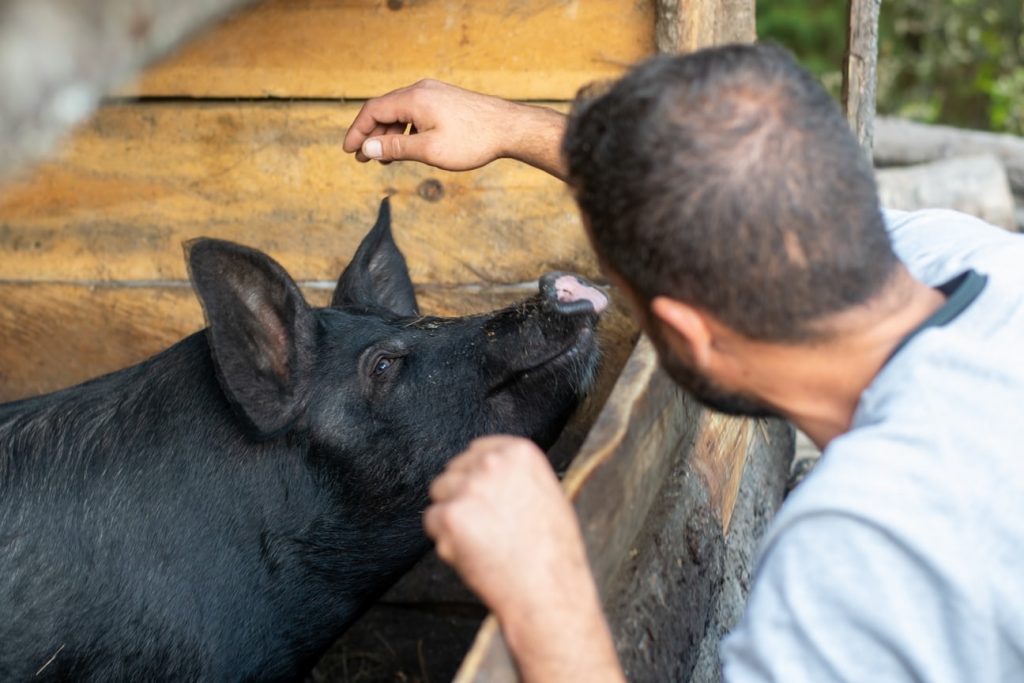
We started raising meat pigs in 2014 and fell in love with these amazing creatures. We will never go back to buying pork from the grocery store again. The meat is far superior in flavor. We find it very fulfilling to be self-sufficient by growing and raising our own food.
It is important to keep the mindset that these animals are not pets, they are livestock that will become food. With that in mind, life on a loving homestead can be a far superior alternative to the lifestyle of commercially raised pigs.
Raising Meat Pigs
This article is part of the series The Complete Guide to Raising Pigs in Your Backyard.
- The Benefits, Myths, and Downside of Keeping Pigs
- Choosing the Right Pig Breed for Your Homestead
- Raising Pigs: Housing, Fencing and Supplies
- A Glossary of Pig Farming Terminology

First Things First
Before buying piglets, confirm with your local municipality allows raising livestock. You don’t want to break any zoning ordinances. Many townships will stipulate how many animals you can have per acre. Make sure you do not exceed the maximum. There are also sometimes ordinances on manure storage and odor/noise/movement of livestock.
For example, our township allows a density of 1.4 animal units per acre and each type of livestock has a different “size”. Swine are categorized as .4 “animal units” so here on our 10 acres, we can have up to 35 pigs. Allowances vary by municipality.
The math . . .
10 acres x 1.4 animal units = 14 animal units
14 animal units x .4 swine units = 35 pigs
If you have other livestock, you need to subtract them from your total animal units. Then multiply by the swine units.
Resources for Raising Meat Pigs
Before you get started raising pigs, make sure to educate yourself. Here are some great resources with more information on what it takes to keep pigs.
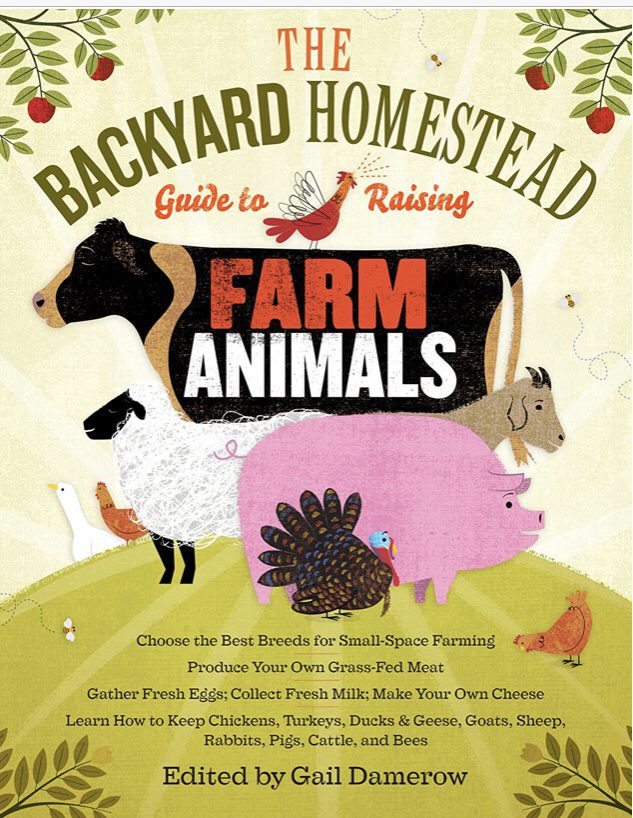
The Backyard Homestead Guide to Raising Farm Animals – This book provides a great overview of the pig-raising process. It also discusses other types of livestock. This book is great for homestead inspiration and beginners in pig raising. (This was the only book I read before getting our first backyard pigs, but we are very spontaneous homesteaders!)
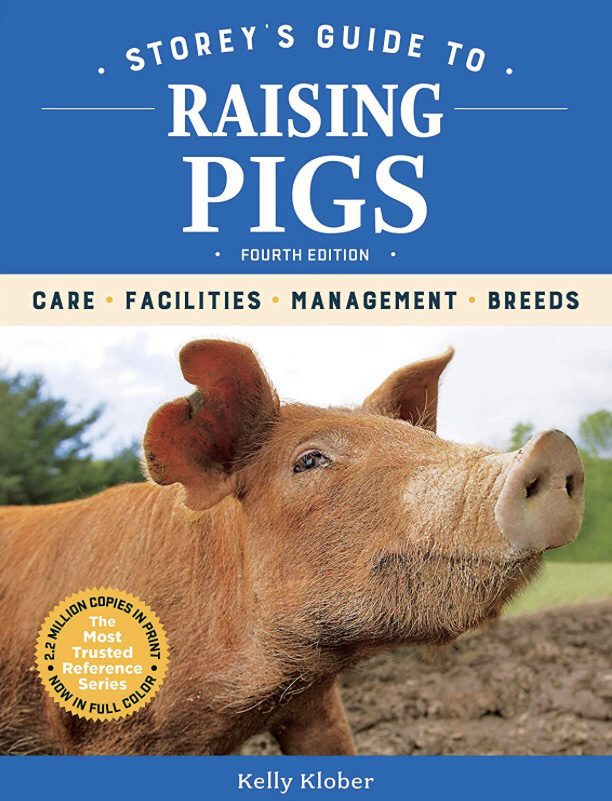
Storey’s Guide to Raising Pigs – Are you interested in a larger-scale pig farming operation? Then this is the book for you. It is very thorough and discusses every aspect of the hog industry. It even goes over the home butchering process.
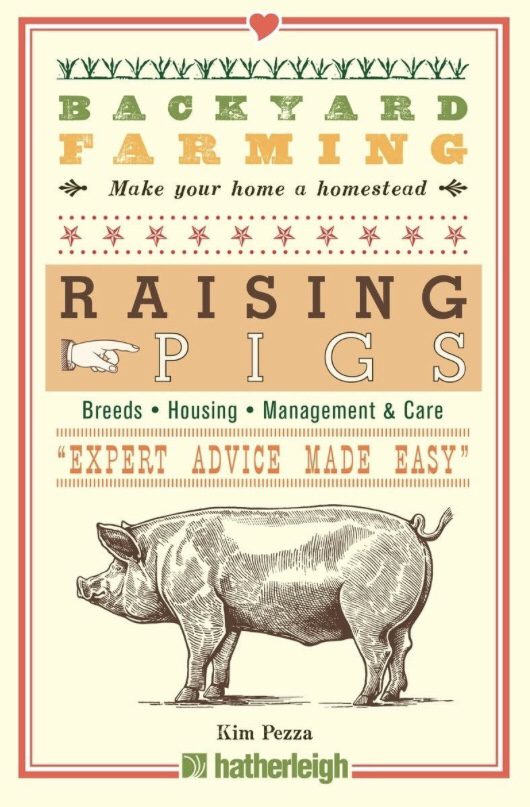
Backyard Farming: Raising Pigs – This book is written for a homesteader and hobby farmer audience. It goes over the entire process of raising backyard pigs from housing to sale. It is simple for the novice to read. The book has answers to just about any question a backyard farmer could have.
Timeline for Raising Meat Pigs
When raising a grower pig, you will need to purchase a weaned piglet from a farm or breeder. These piglets are usually about 8 weeks old (50-60lbs) and have just been weaned from their mother’s milk. Finishing the pig will take about 4-6 months so the best time to get started is early spring-mid summer. Keeping pigs outdoors in winter can be challenging, so it’s best to avoid this until you have some experience.
Finding Piglets
Do some research into which pig breed is right for your needs. To find piglets, you can:
- Call local farmers to see if they have piglets for sale.
- Check your local tractor supply, feed co-op, or other farming-related stores for livestock sale ads. You can also ask the employees for a referral.
- Join Facebook livestock exchange, farming, or homesteading groups.
- Search through classified ads on sites such as Craigslist.org, Farms.com, or Farmia.com
Be gentle and calm when handling your new piglets. Leaving their litter and sow is traumatic. Enduring transportation and adapting to their new environment is also challenging. If you are picking up your piglets from the farm an animal trailer is helpful. Otherwise, a truck bed with a dog kennel or other type of crate will work.
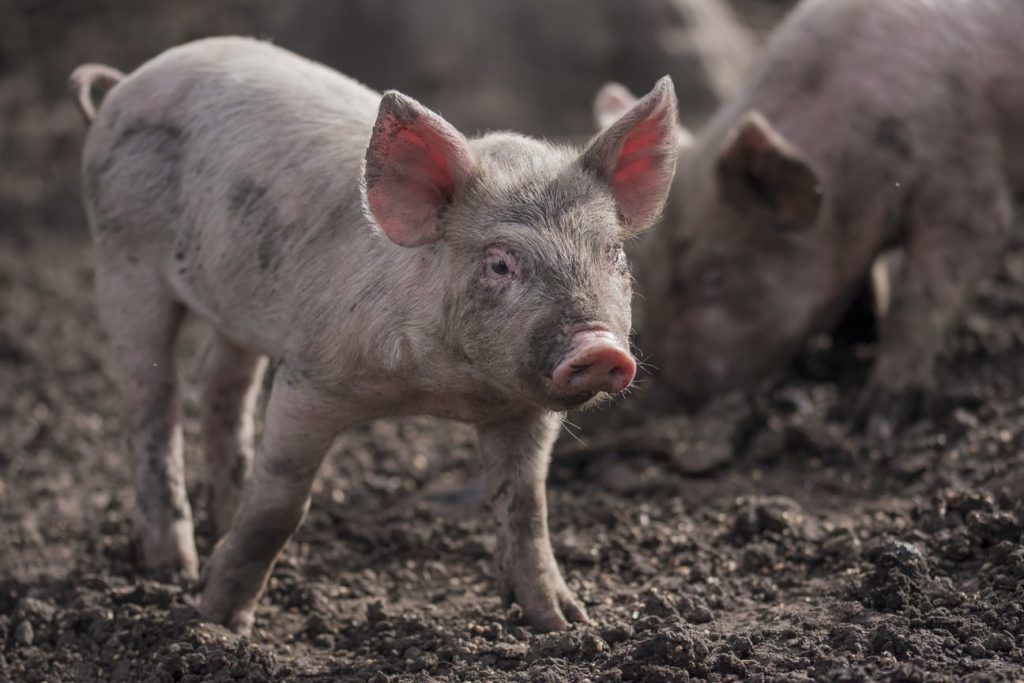
Raising Meat Pigs: Housing and Fencing
You will need to set up a fenced enclosure with a structure for their shelter. A barn is great, but not required. Their food and water need to be checked and refilled every few days to a week. Keep young pigs out of inclement weather to prevent pneumonia and other health concerns.
Learn more about the benefits, myths, and downside of keeping pigs to avoid some newbie mistakes.
Cost and Savings Breakdown
I am going to lay out some basic costs and savings for raising meat pigs. Hopefully, this will help beginner pig farmers calculate projections for their own operations. Of course, the costs of raising pigs can vary by location, quantity/size of pigs, and setup.
Besides superior flavor, raising your own pork has the added benefit of saving you money. Store-bought pork can range anywhere from $3 to $12 per pound with a national average of $4.33/lb. Whole pigs after processing sell between $700-$850.
Calculations for your Farm
These costs are averages based on my personal experience. Costs may vary depending on your location. This is simply meant to help you determine your own projections.
Cost of piglets – $60-$120
Feed cost – $0.20 – $0.60 per pound of feed (~720-1080lb of feed per pig over 4-6 months)
One-time cost of fencing, shelter set up, and basic supplies – $150-$600
Butchering cost – $0.50-$0.90 per pound of hanging weight, additional $0.10-$0.20 per pound for smoked or other special order meats)
Kill Fee – $40-$60 per animal (you are not allowed to slaughter the animals yourself before delivery to the butcher)
One important consideration when choosing a smaller breed of pig is that the butchering costs will be higher. Most butchers charge a “kill fee”, and then have a set price per pound for different cuts and preparations. With a kill fee of $50, butchering 10 pigs that are 150 pounds each would cost $500. Butchering 5 pigs at 300 pounds each would only cost $250 (plus the cost per pound of hanging weight). That’s double the price for the same quantity of meat.
Example
For 10 pigs (not including set-up expenses):
- $800 for piglets (10 pigs x $80)
- $1,440 for feed (10 pigs x 720lb = 7,200lb of feed)(7,200lb x $0.20 per pound = $1,440)
- $600 kill fee (10 pigs x $60)
- $1,500 butcher cost (250lb x 10 pigs = 2500lb of pigs)(2500lb x $0.60 = $1,500)
- Total Cost to Raise 10 Pigs: $4,340
- $4,340 / 2,500lb = $1.74 per pound
By raising your own pigs, you can have higher quality meat for less than half of market prices. You can also make a great profit while still charging less than the competition.

The Process of Processing
Something that most newbie pig farmers don’t realize is that butchers schedule ahead of time for months down the road. If you wait to make an appointment with the butcher, you might not find a slot. Make your butcher appointment soon after purchasing your piglets.
Some butchers will slaughter livestock themselves, while others outsource. You may need to make two appointments – one with a slaughterhouse and one with a butcher. They typically take care of the transportation between the two.
Moving and transporting mature pigs can pose some challenges. Make sure your enclosure is set up with a double gate design to corral the animals for loading. You will need a trailer with a ramp so they can walk into it. The trailer can be fully enclosed or have high enough walls to secure the pigs.
Consider loading the pigs onto the trailer the day before your butcher appointment in case it takes longer than anticipated. You can bait the animals using feed or fresh produce to get them to walk onto the trailer.
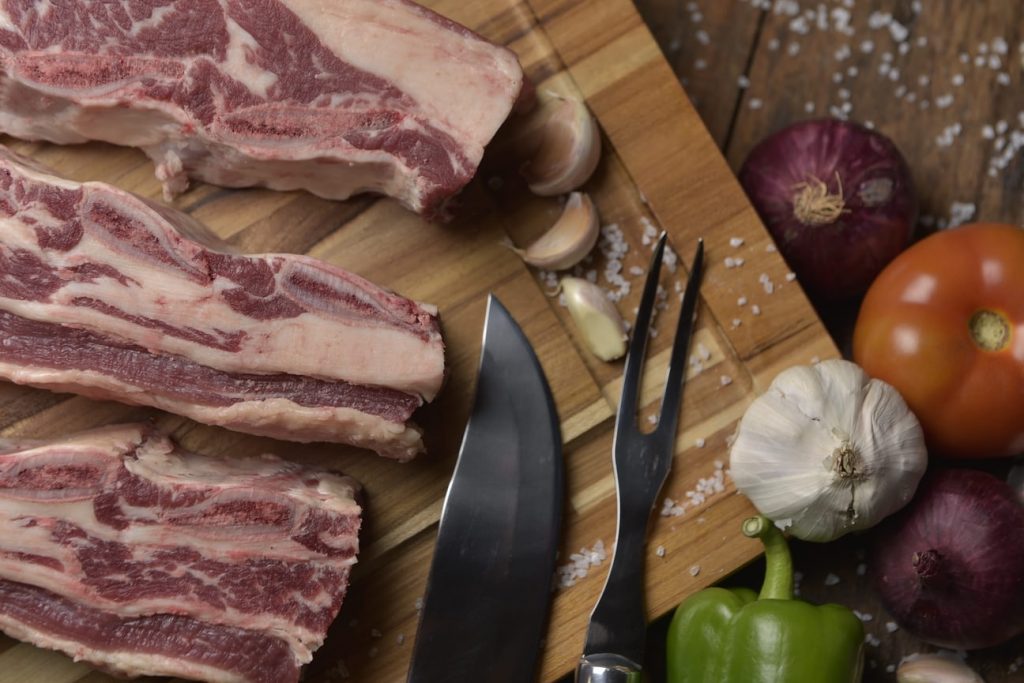
Most butchers will ask for your special instructions and may have an order form for choosing your cuts. This needs to be completed before your butcher appointment.
How to Sell Pork
Selling pork can be a tricky endeavor for a small farm or homestead. Laws vary by state. However, in most municipalities, you cannot sell meat by the pound (retail sales) without a food license. You also need to be inspected by the state or United States Dept. of Agriculture (USDA) and comply with the Food Safety Inspection Service (FSIS). Which can be a difficult process for someone raising a few backyard pigs for friends and family.
The packaged pork you receive from the butcher will say “not for individual sale” right on it. However, you can sell a whole, half, or quarter animal. Your customer can pick it up from the butcher. This is permissible as long as you are a small-scale farm and are not selling in a commercial capacity.
Take a deposit for every pig you intend to sell when they are young. Let your customers know the date for butchering. Keep records for tax time. Before the butcher appointment, collect individual processing orders for the hogs. Give these orders to the butcher at the time of slaughter.
You can not butcher your own animal and sell it to the public. This includes meat processing and wholesale. You need USDA inspections and appropriate licenses. As always, check regulations with your local government to ensure you are following the law.
More Ideas For Raising Meat Pigs
Learn the fundamentals of raising meat pigs in the 6-part series The Complete Guide to Raising Pigs in your Backyard.
Leave a comment below and share your ideas!

Subscribe
More Ideas for your Farm or Homestead
I hope you enjoyed these inspiring pig breeds for your homestead or farm. Comment below with your favorite breeds to raise!
Looking for more inspiration?
- 75+ Side Hustles for Farmers to Boost Income
- Farm Layout Ideas: Site Plan Designs for Your Homestead
- The Biggest Mistakes Families Make when Inheriting Land
- Why Building Your Own Home Is Achievable and Affordable
- My Passion for Permaculture (and how to apply it to your homestead)!
- Is Geothermal Right for You? (Taking Your Homestead Off-Grid)
- How to Start Homesteading Where You Live Today!
- How to Choose the Perfect Location to Invest in Real Estate
- My Homesteading Journey: Year One
- Choosing the Right Pig Breed for your Homestead
- Boosting Dairy Farm Productivity With Climate Control Strategies
- The Bare Soil Dilemma
- The Comprehensive Guide to Raised Bed Gardening
- Raised Bed Vegetable Garden Plan
- Planning a Survival Garden for Food and Medicine
- How to Grow a Medicinal Tea Garden (Plus over 40 Plants!)
- How to Build a DIY Outdoor Pizza Oven
- The Art of Homesteading Relaxation: Why Rest is Your Greatest Tool
- The Ultimate List of Homesteading Skills!
Share this Post on Social Media!
For more inspiration, follow my Pinterest Board: Homesteading and Farming.

So I’m about to call a slaughterhouse near me for the first time this week. I’m not sure what the process is and was wondering what are some good questions and what I should know before I call.
Thank you for this breakdown. How would you say the costs have changed since writing? Your pork price range seemed to still ring true, but something tells me piglet price and feed is not still so reasonable.