

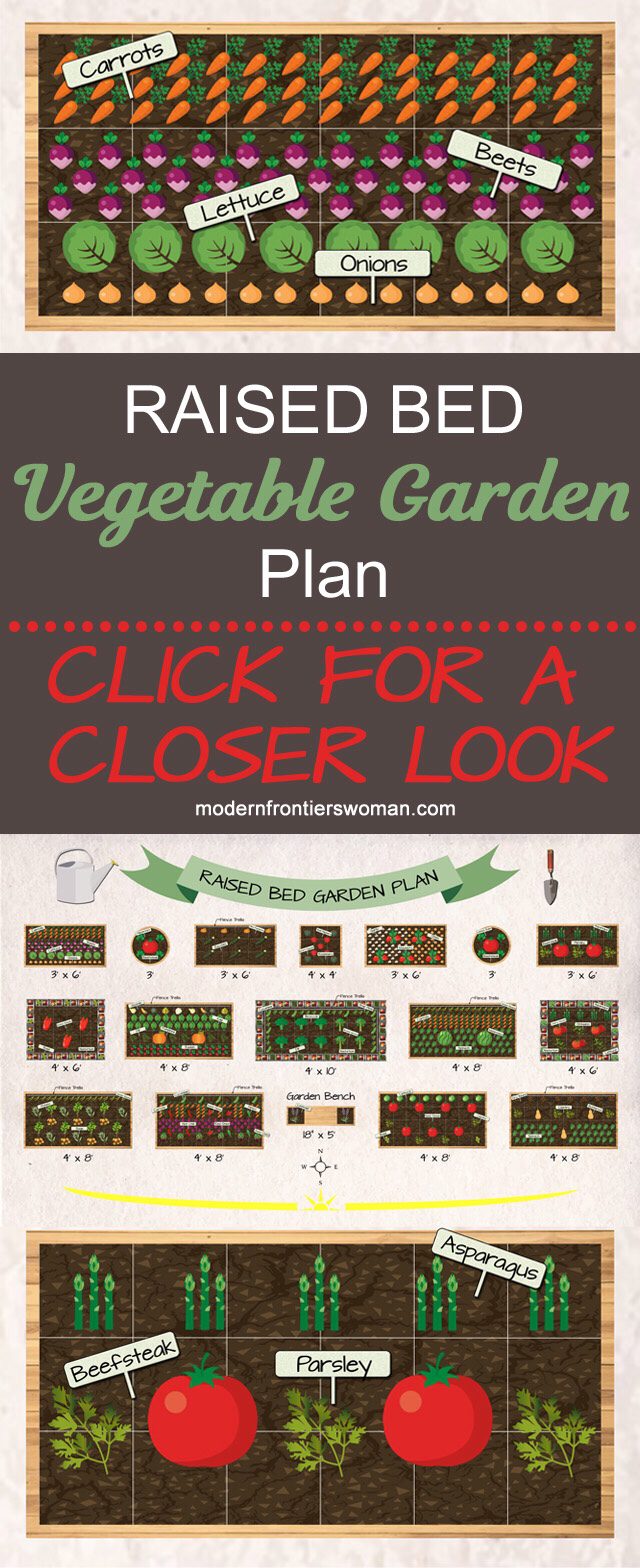
This raised bed vegetable garden plan includes helpful diagrams with space requirements for each plant! I plan my garden layout as efficiently as possible. I use companion planting and interplanting techniques to combine crops with beneficial synergy. These diagrams with raised bed garden ideas will kick-start your garden design with inspiration and proven plant combinations.
I also practice succession planting to maximize efficiency in the garden. When one plant is harvested, I plant another in the same space. Don’t forget, your produce is only as good as your soil. Take as much care in preparing your beds as you do in growing.
I start all my plants from seed indoors to supply my garden. I use heirloom varieties so the seeds are viable to produce a future generation of plants. This allows me to be completely self-sufficient by saving seeds. This eliminates the need to shop at a greenhouse or nursery for plants.
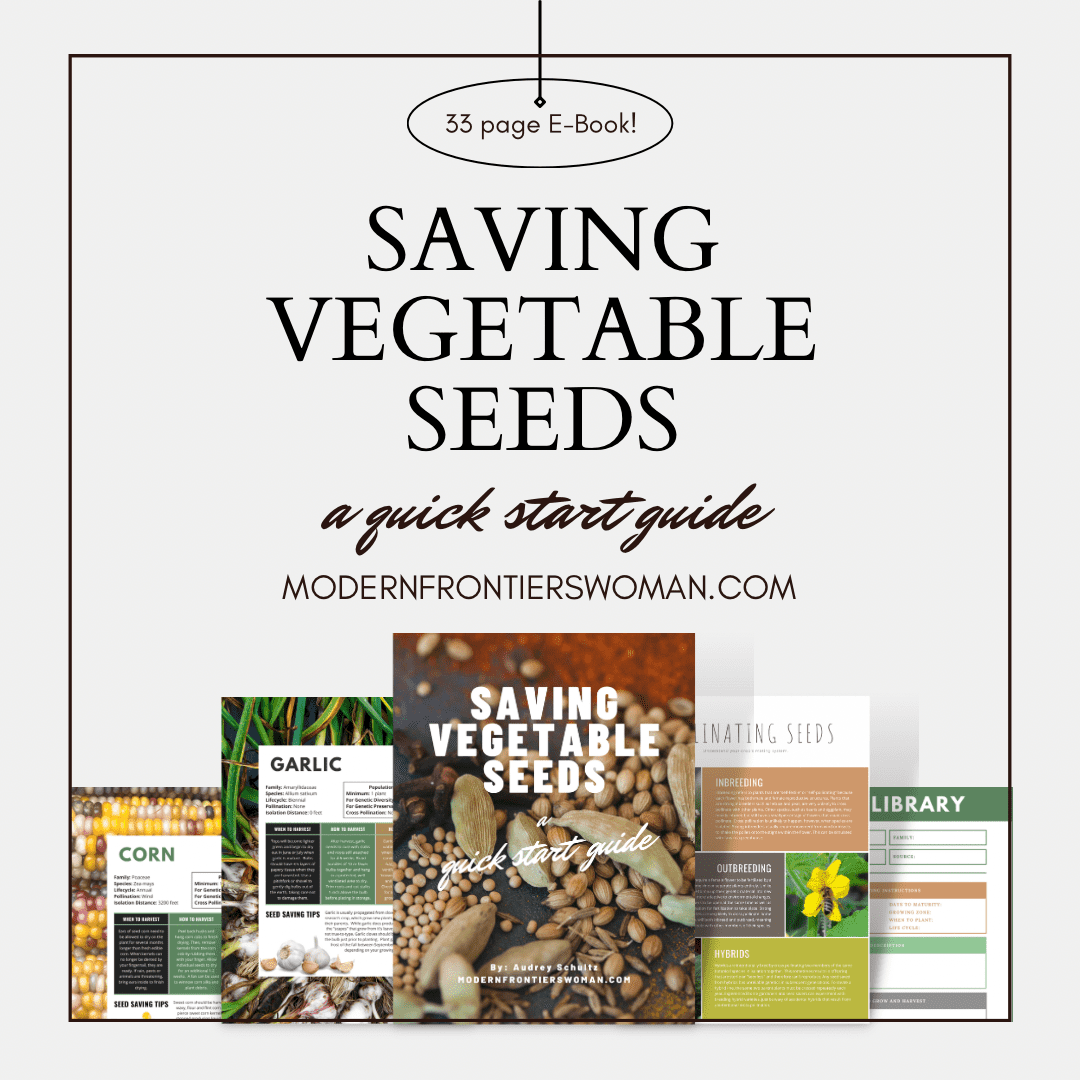
Are you interested in saving your own heirloom vegetable seeds? If so, check out my E-book Saving Vegetable Seeds – a quick start guide.
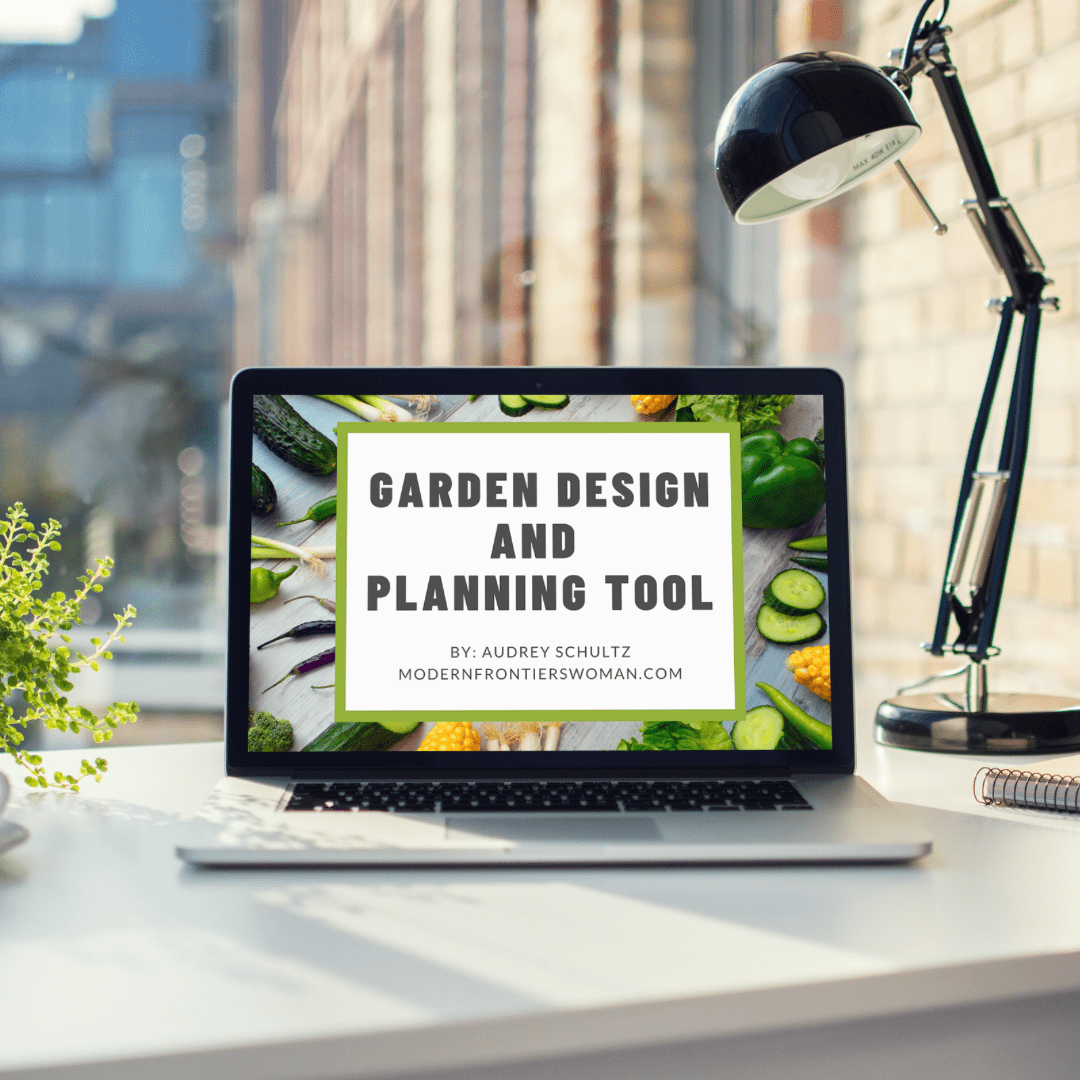
If you want to create your own computerized garden layout, check out my Garden Design and Planning Tool! Plants are pre-formatted with their mature sizes. This ensures you will get the spacing right without having to research each crop individually.
If you’re looking for a large scale design you can apply to your entire property, check out my article, Farm Layout Ideas: Site Plan Designs for Your Homestead.

Raised Bed Vegetable Garden Plan
If you are new to gardening, review this Veggie Garden Supply List to help you get started. It includes everything you need from starting seeds indoors, to canning the garden harvest. For more unique gardening accessories, check out these Most Wished for Gardening Accessories!
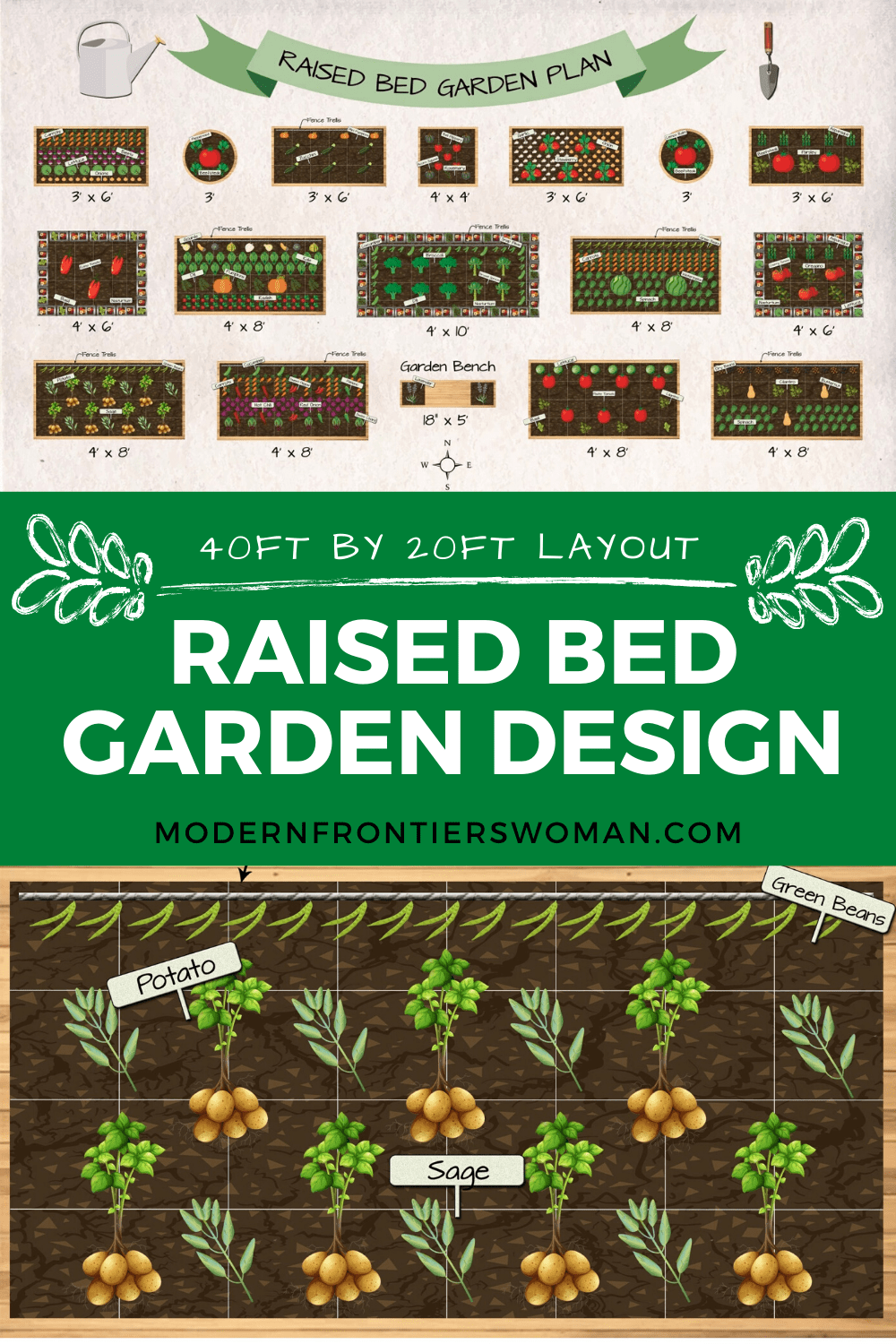
The overall size of my garden area is 40ft by 20ft. Each of my diagrams has a square-foot grid in the background to show how the plants are spaced. I’m going to break each raised bed down but before I do, let me define some of my wordage.
Plant Definitions:
- Early – a variety that will produce its harvest early in the year, leaving available garden space for replanting.
- Late – a variety that takes a long time to mature and produces a harvest late in the season.
- Perennial – a plant that will live many seasons.
- Reseed – an annual variety I planted last year that will regrow itself from dropping seeds.
- Overwintered – a plant that was sown the previous season. It went dormant over winter and will be harvested this season (typically spring).
- Seed – I plan to let plants go to seed. This way, I can harvest and save it for the next planting season.
- Trellis – plants climbing a trellis
- Ground – vine plants that will spread out and grow on the ground.
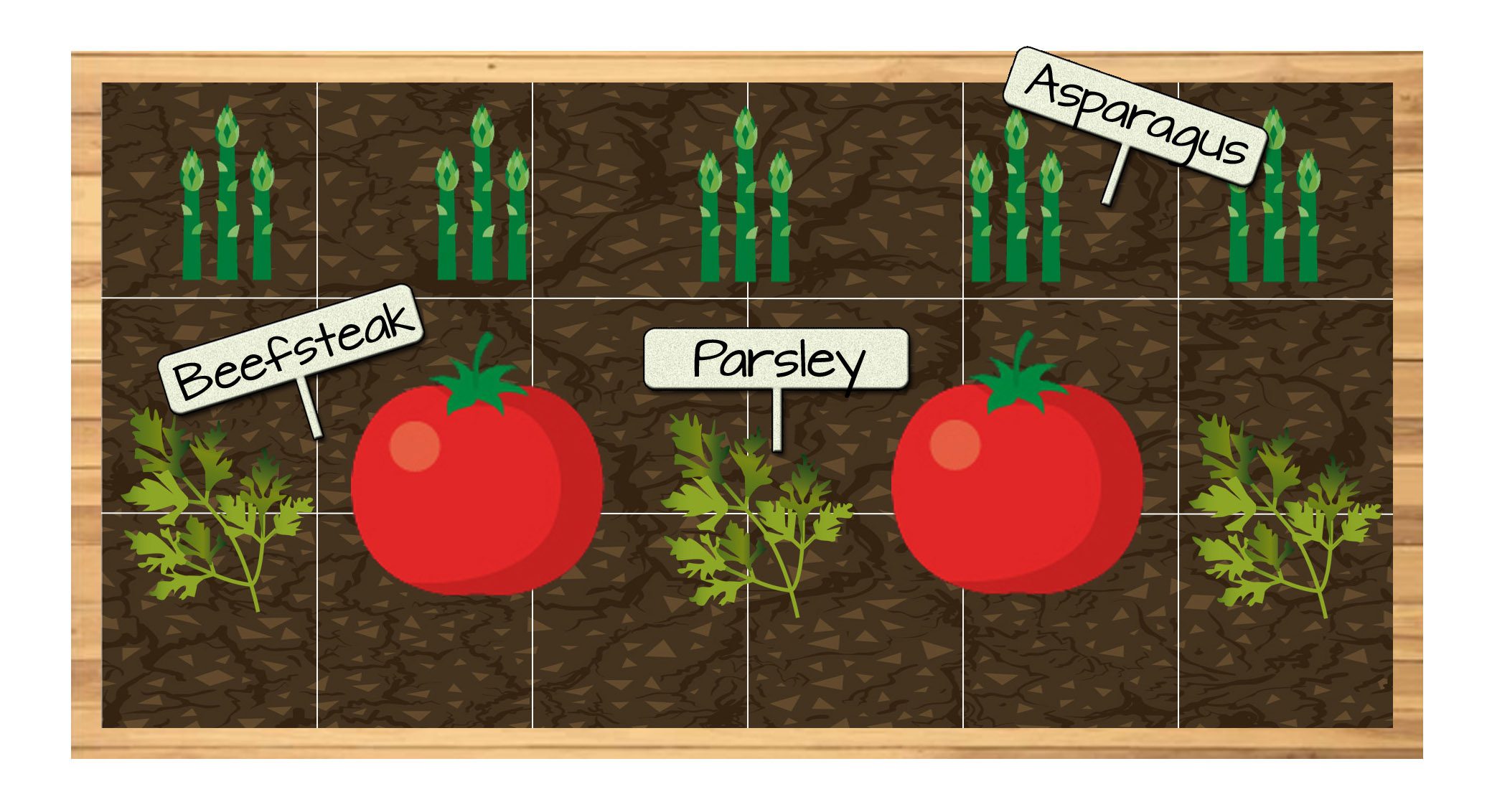
Raised Bed 1
- Asparagus (early, perennial)
- Beefsteak tomatoes (reseed, late)
- Parsley (overwintered)
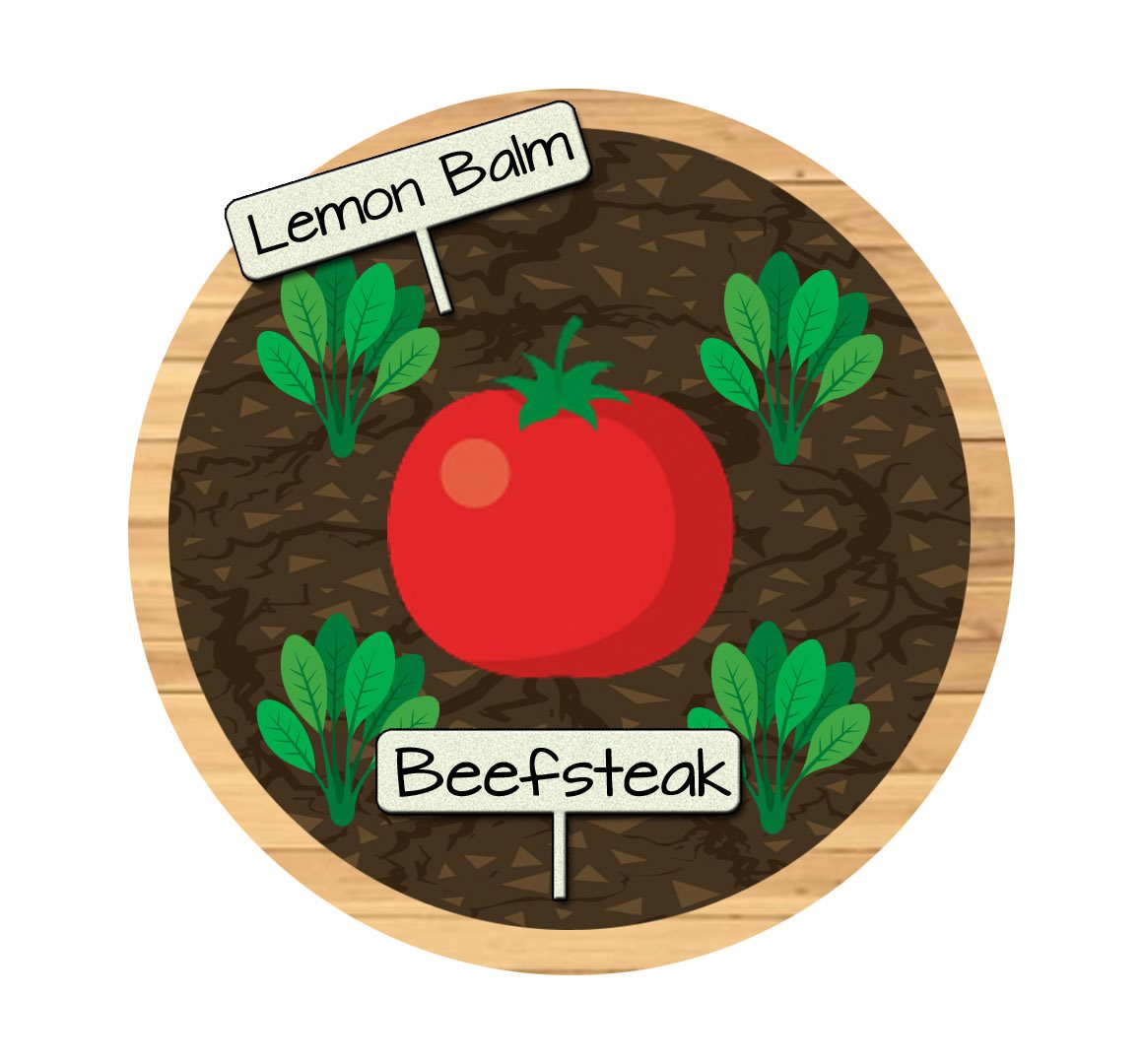
Plant Bucket 1
- Beefsteak tomatoes (reseed, late)
- Lemon balm (perennial)
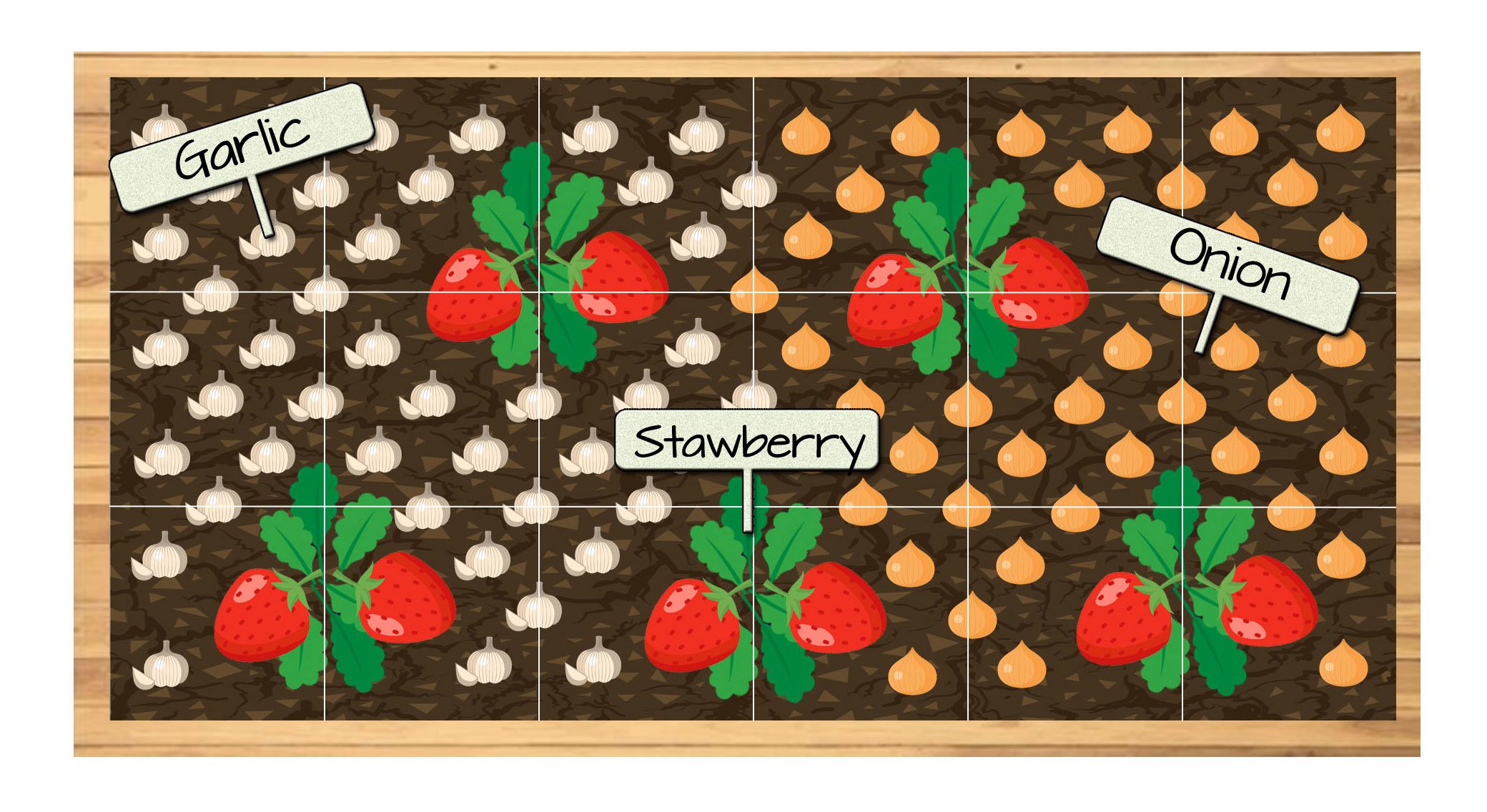
Raised Bed 2
- Strawberries ever-bearing (perennial)
- Onions
- Garlic (overwintered)
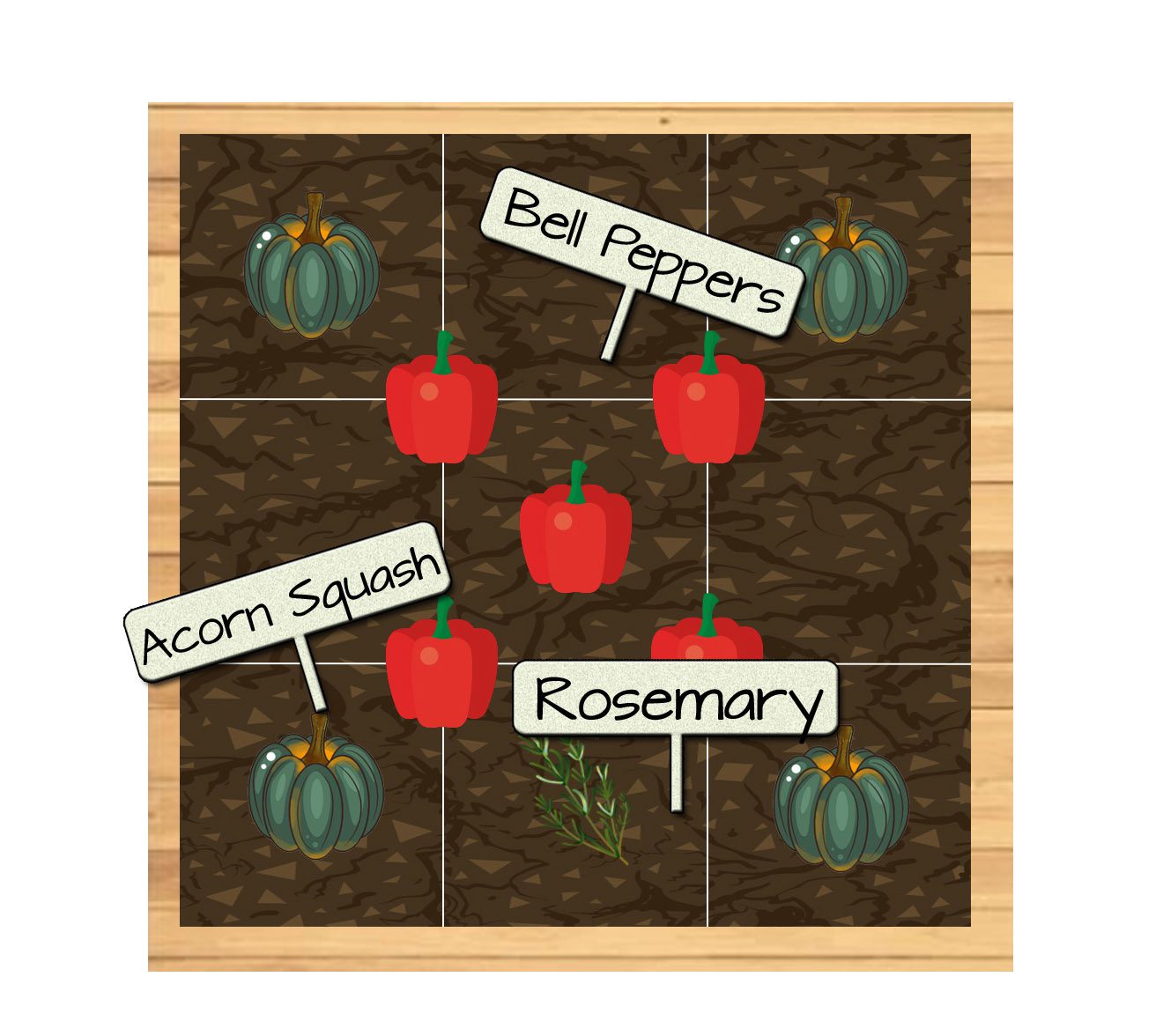
Raised Bed 3
- Bell peppers
- Acorn squash
- Rosemary (perennial)
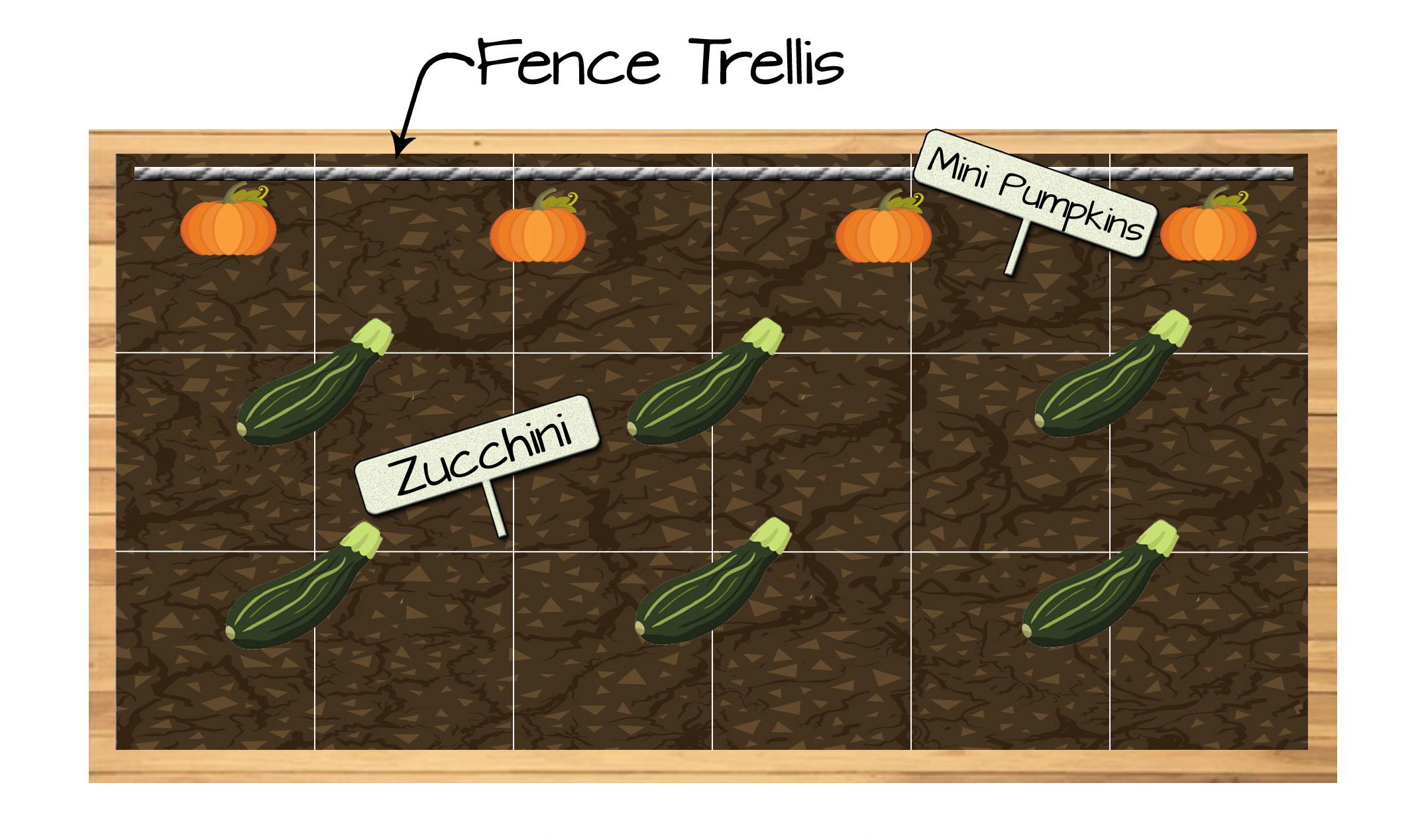
Raised Bed 4
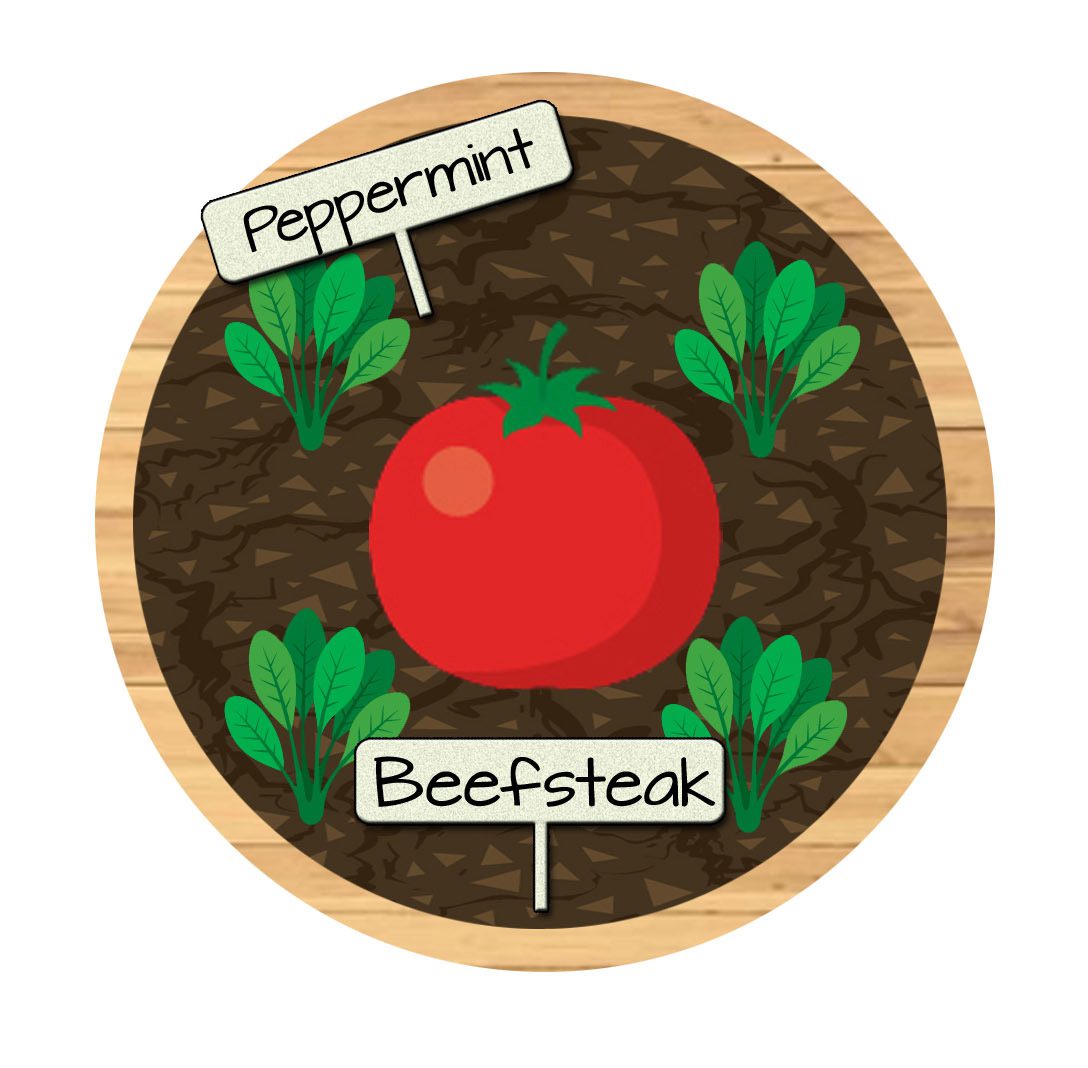
Plant Bucket 2
- Tomatoes
- Peppermint (perennial)
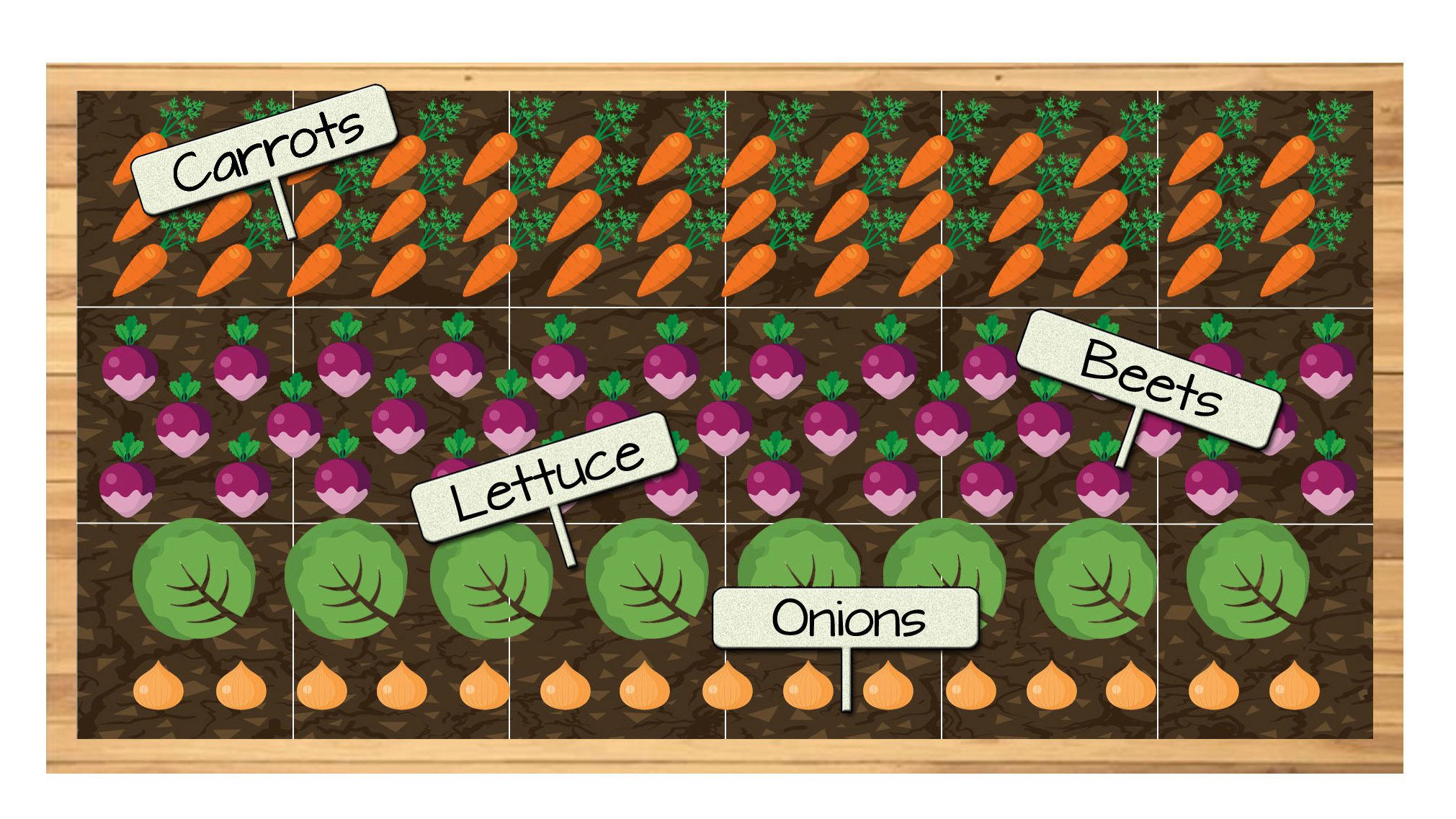
Raised Bed 5
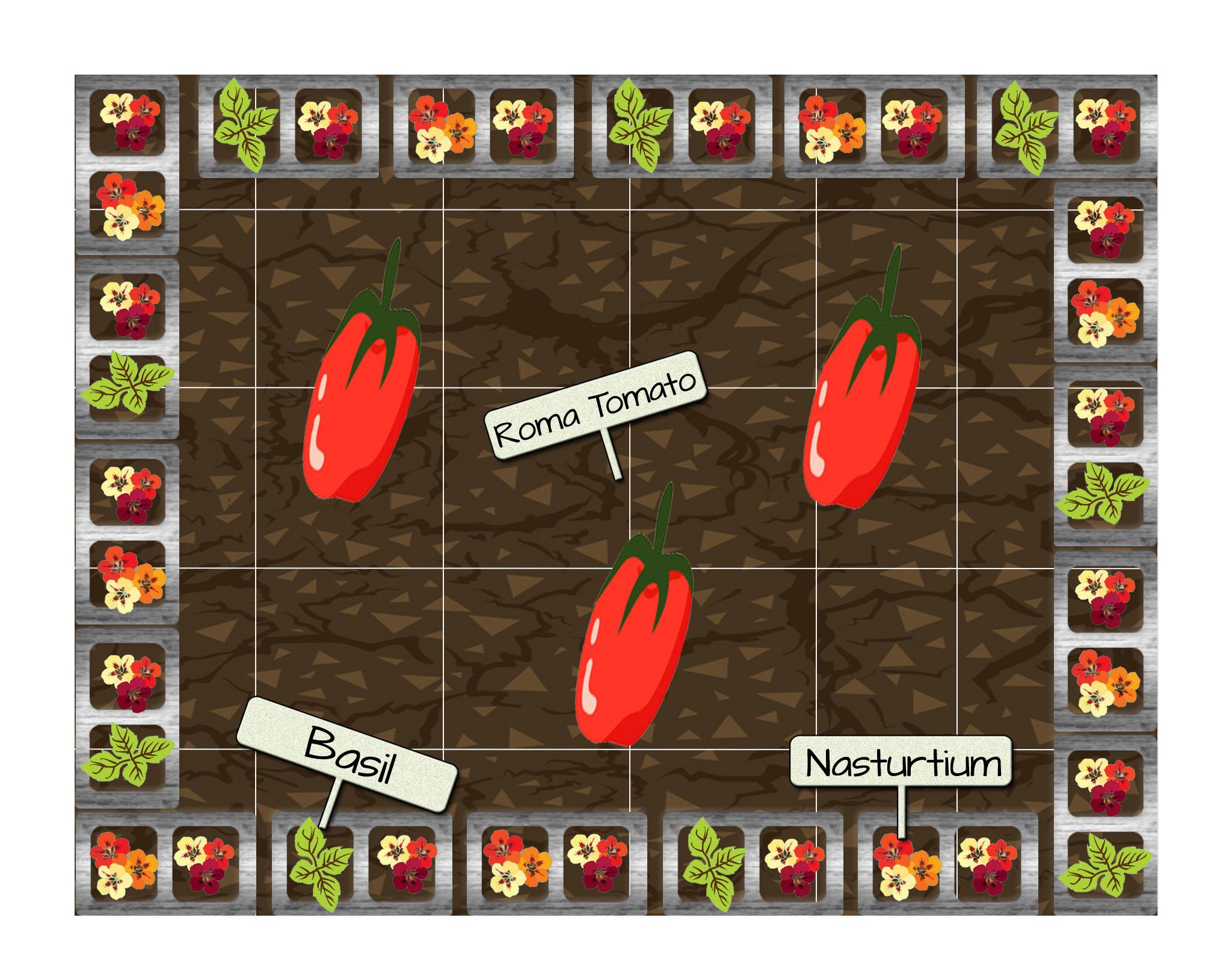
Raised Bed 6
- Roma tomatoes (reseed, late)
- Basil (in cement blocks, seed)
- Nasturtium (in cement blocks)
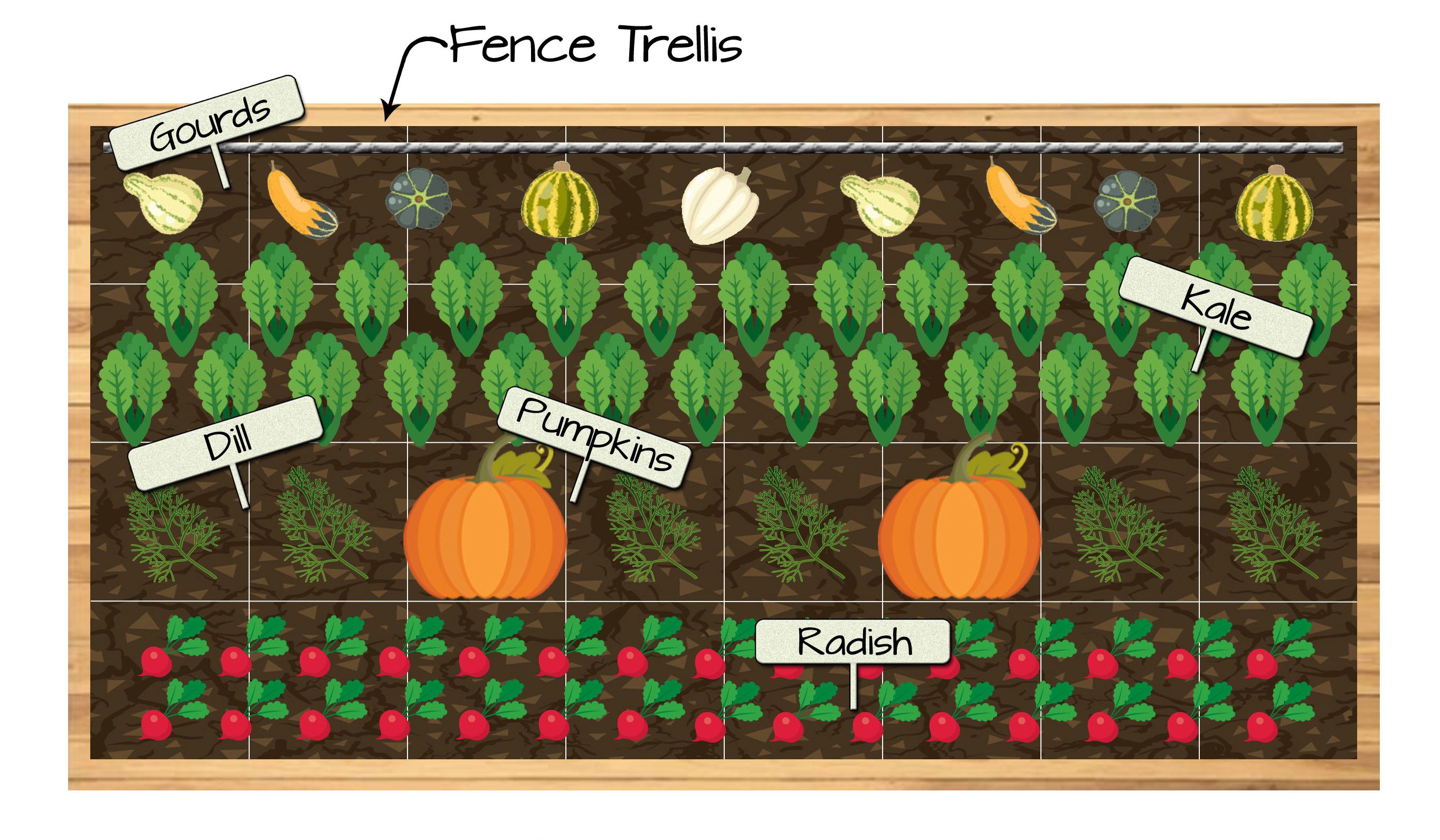
Raised Bed 7
- Mixed gourds (trellis)
- Pumpkins (ground)
- Radish (early, seed)
- Kale (early)
- Dill (seed)
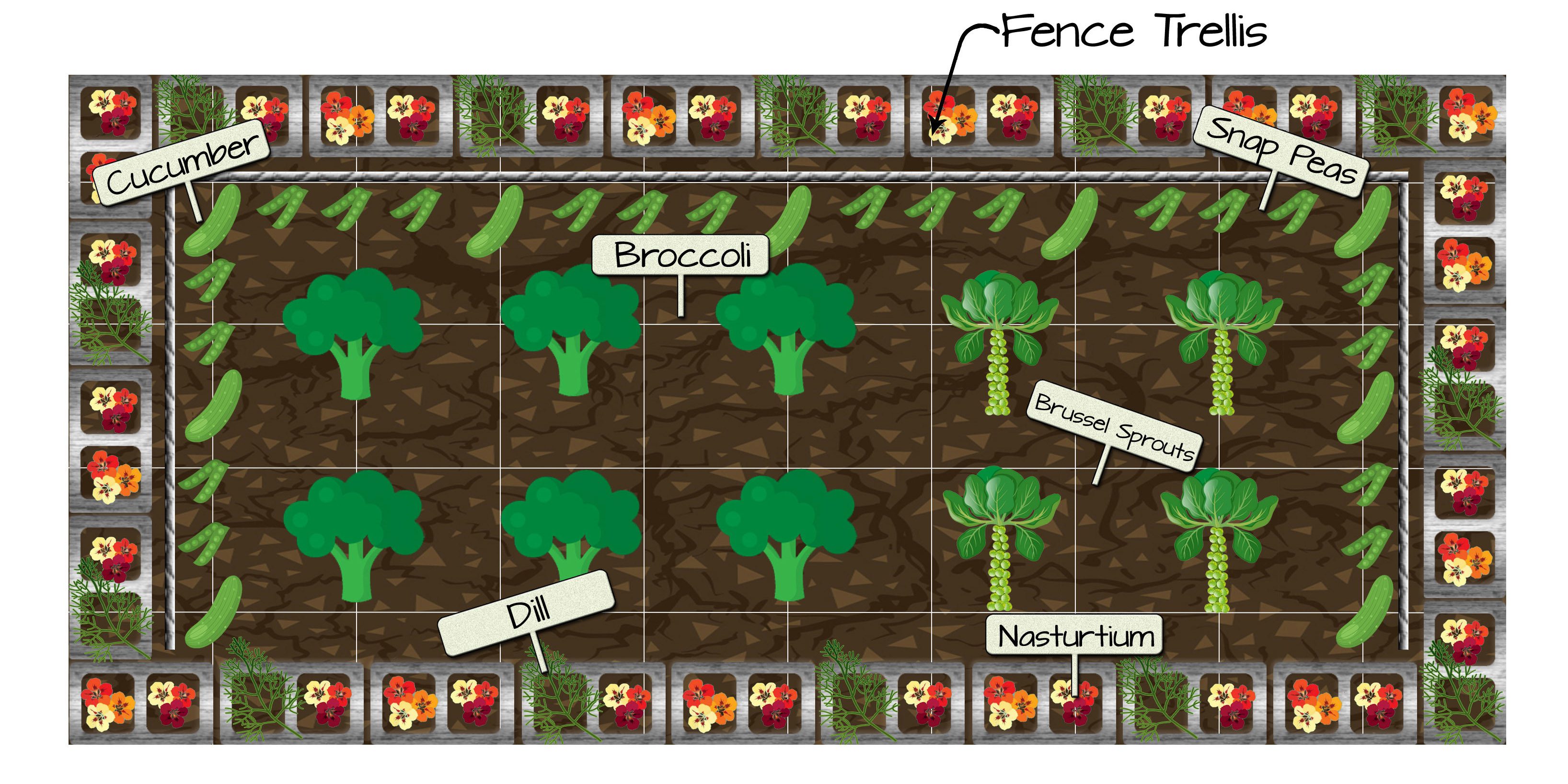
Raised Bed 8
- Snap peas, pole (trellis, early)
- Cucumbers (trellis, mid-late)
- Broccoli (seed)
- Brussels sprouts (seed)
- Dill (in cement blocks)
- Nasturtium (in cement blocks)
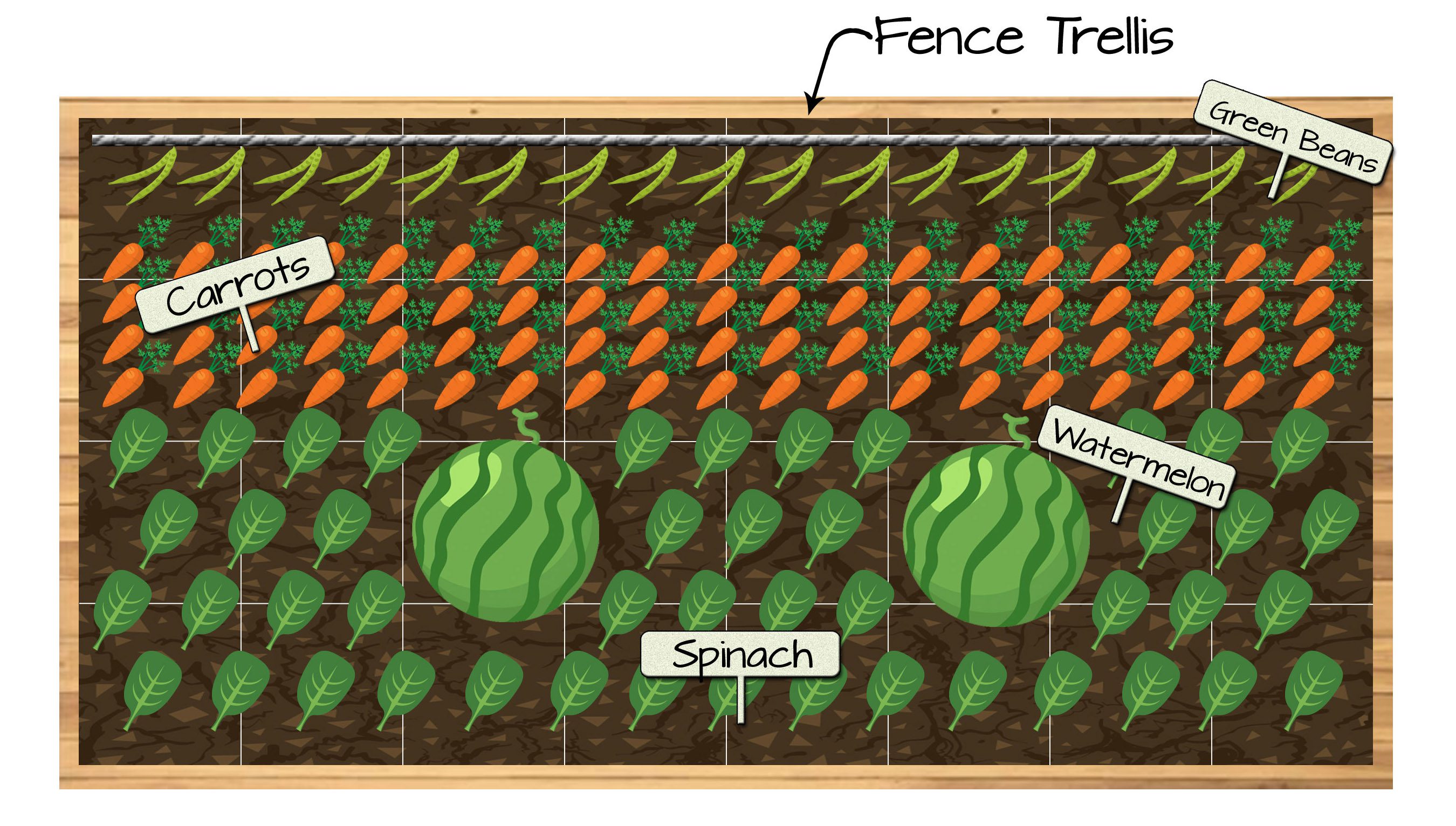
Raised Bed 9
- Green beans (pole)
- Watermelon (late, ground)
- Spinach (early, seed)
- Carrots
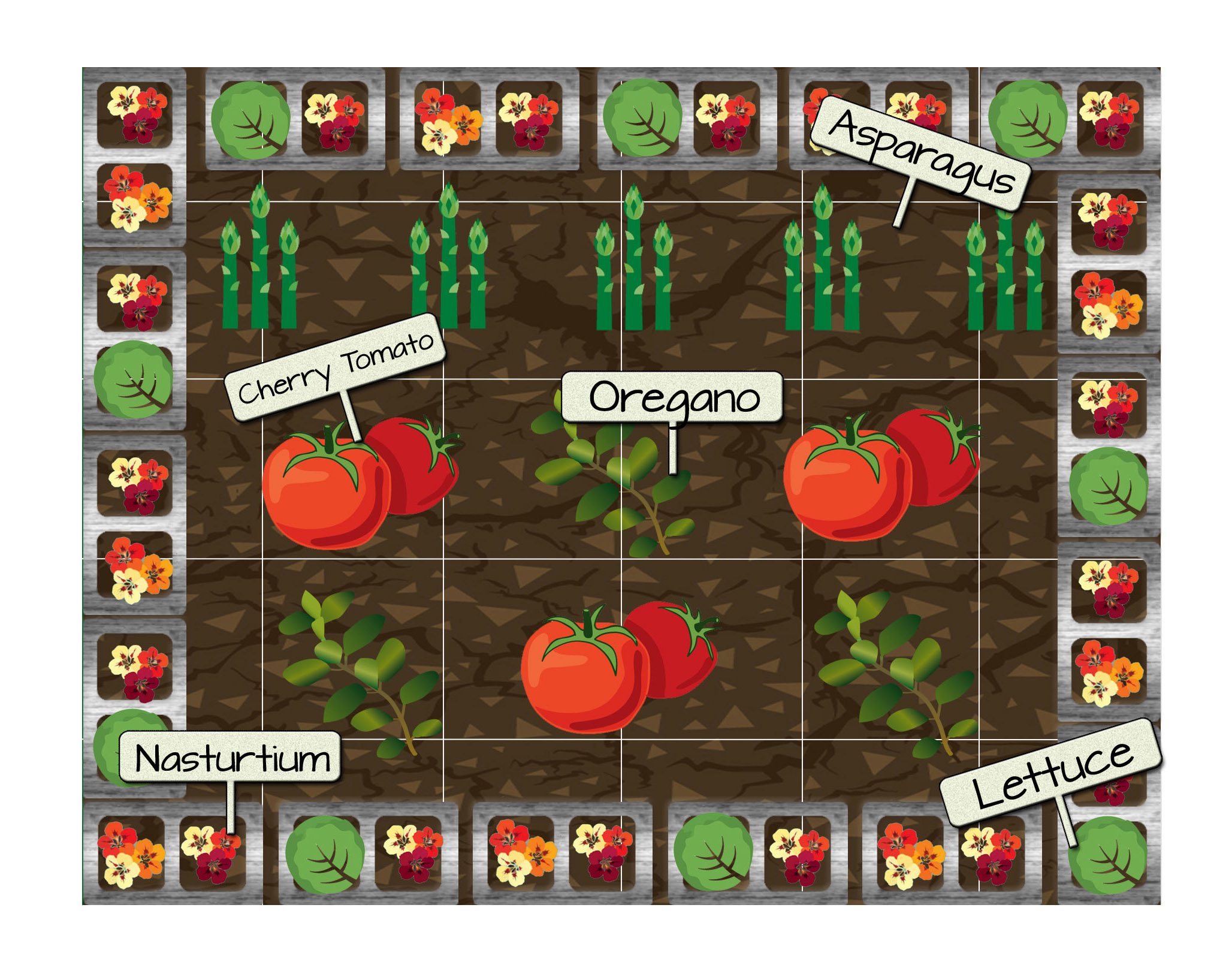
Raised Bed 10
- Asparagus (early)
- Cherry tomatoes (late, reseed)
- Lettuce (in cement blocks)
- Nasturtium (in cement blocks)
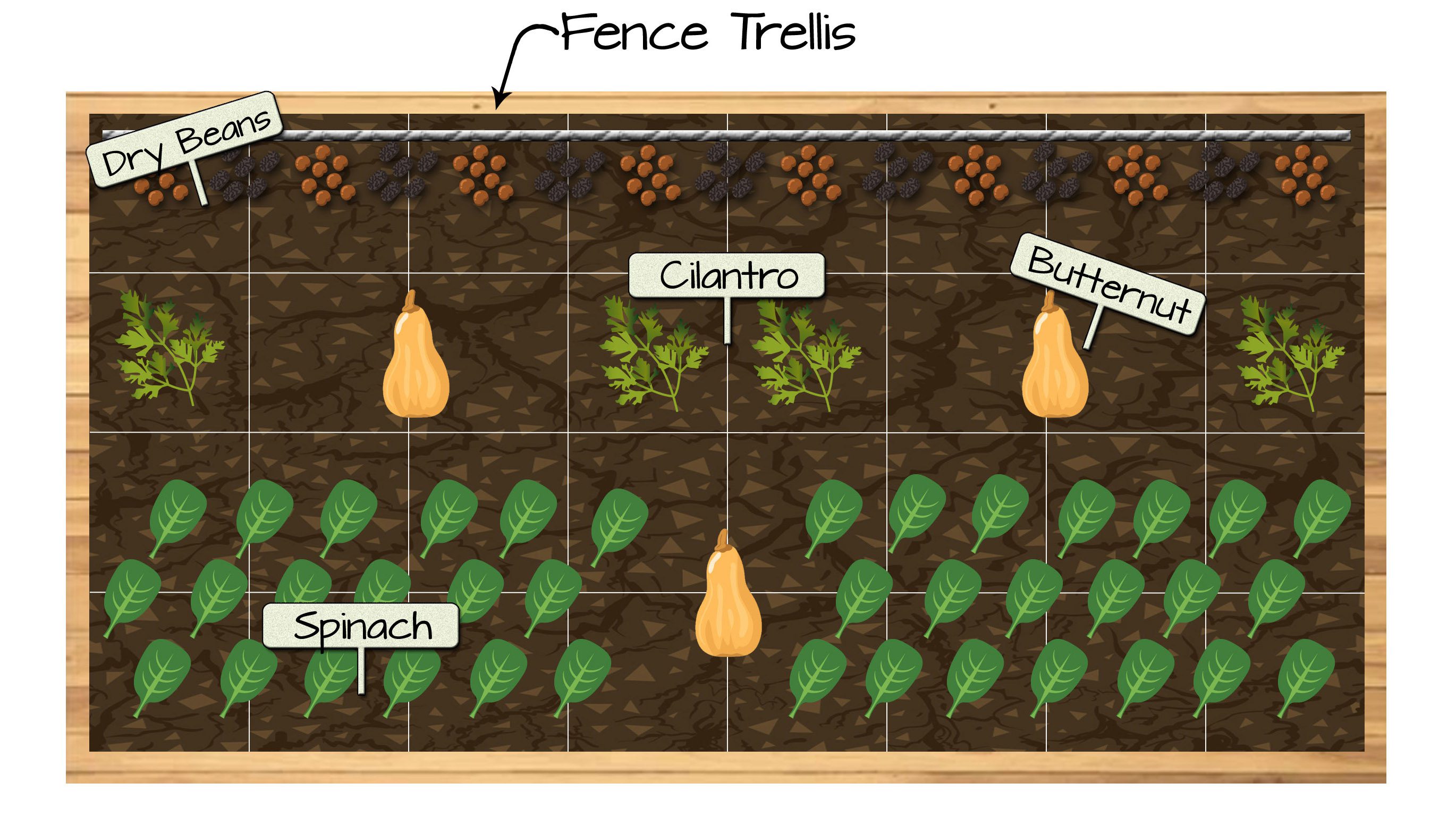
Raised Bed 11
- Dry Beans – black and kidney (seed)
- Cilantro (seed)
- Butternut squash
- Spinach (early)
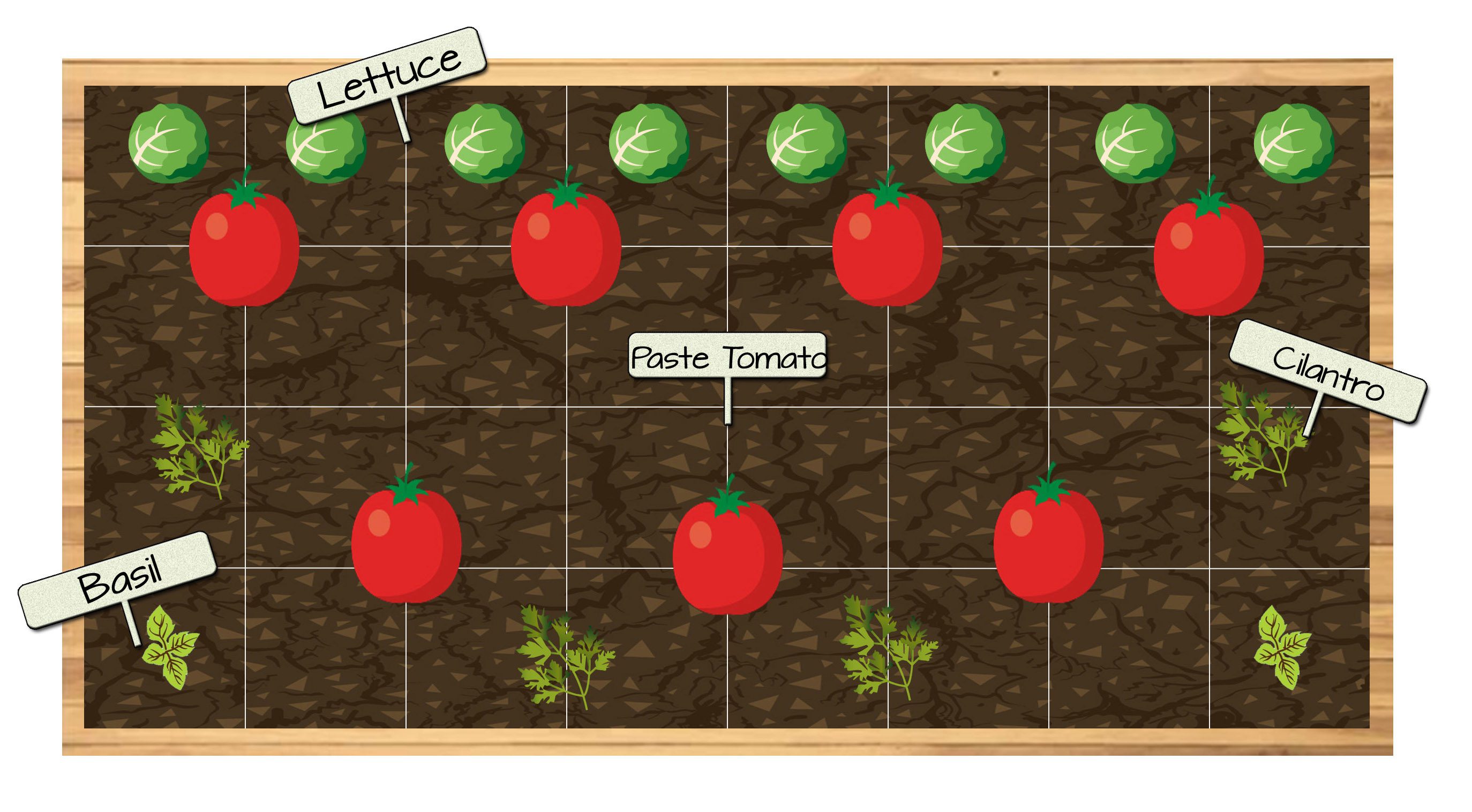
Raised Bed 12
- Paste tomatoes (mid-late)
- Lettuce (early)
- Cilantro
- Basil
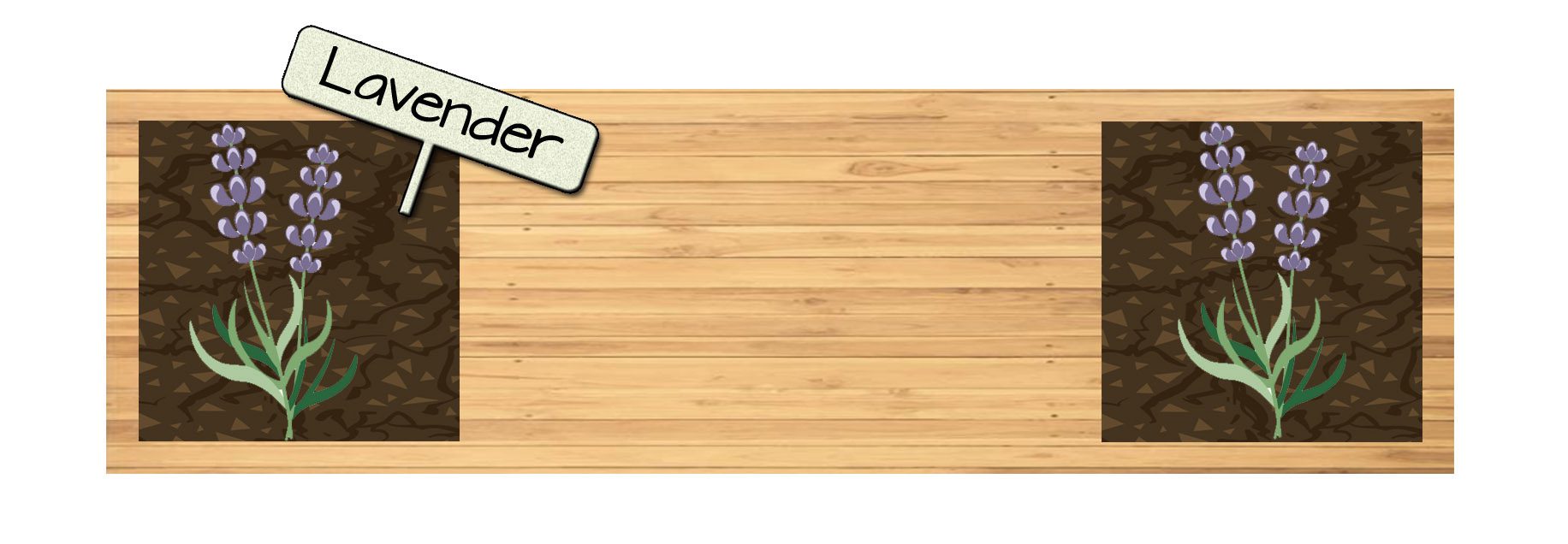
Garden Bench
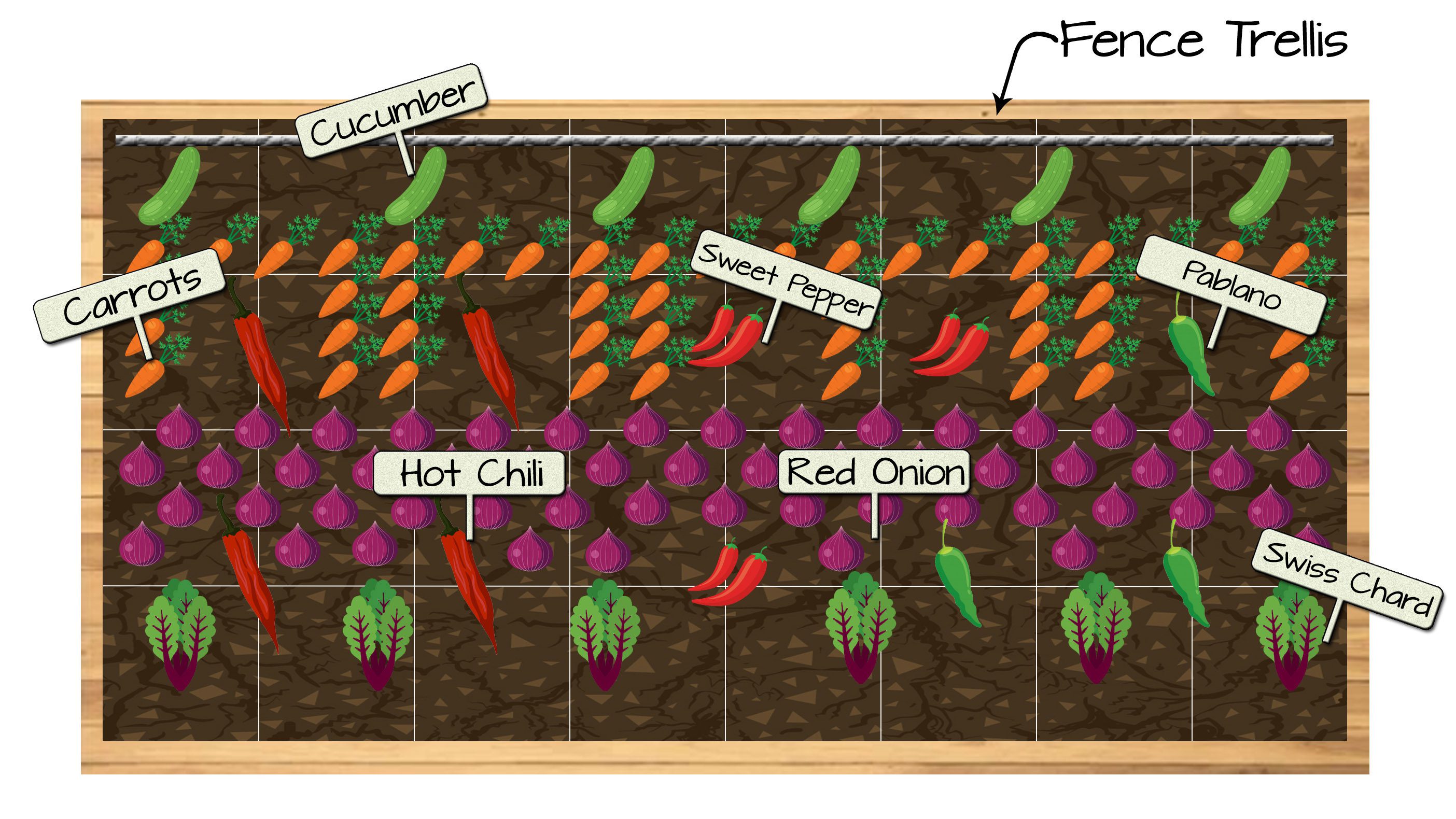
Raised Bed 13
- Hot peppers (chili and pablano)
- Small sweet peppers
- Swiss chard
- Cucumbers (trellis)
- Carrots (leave to overwinter)
- Red Onion
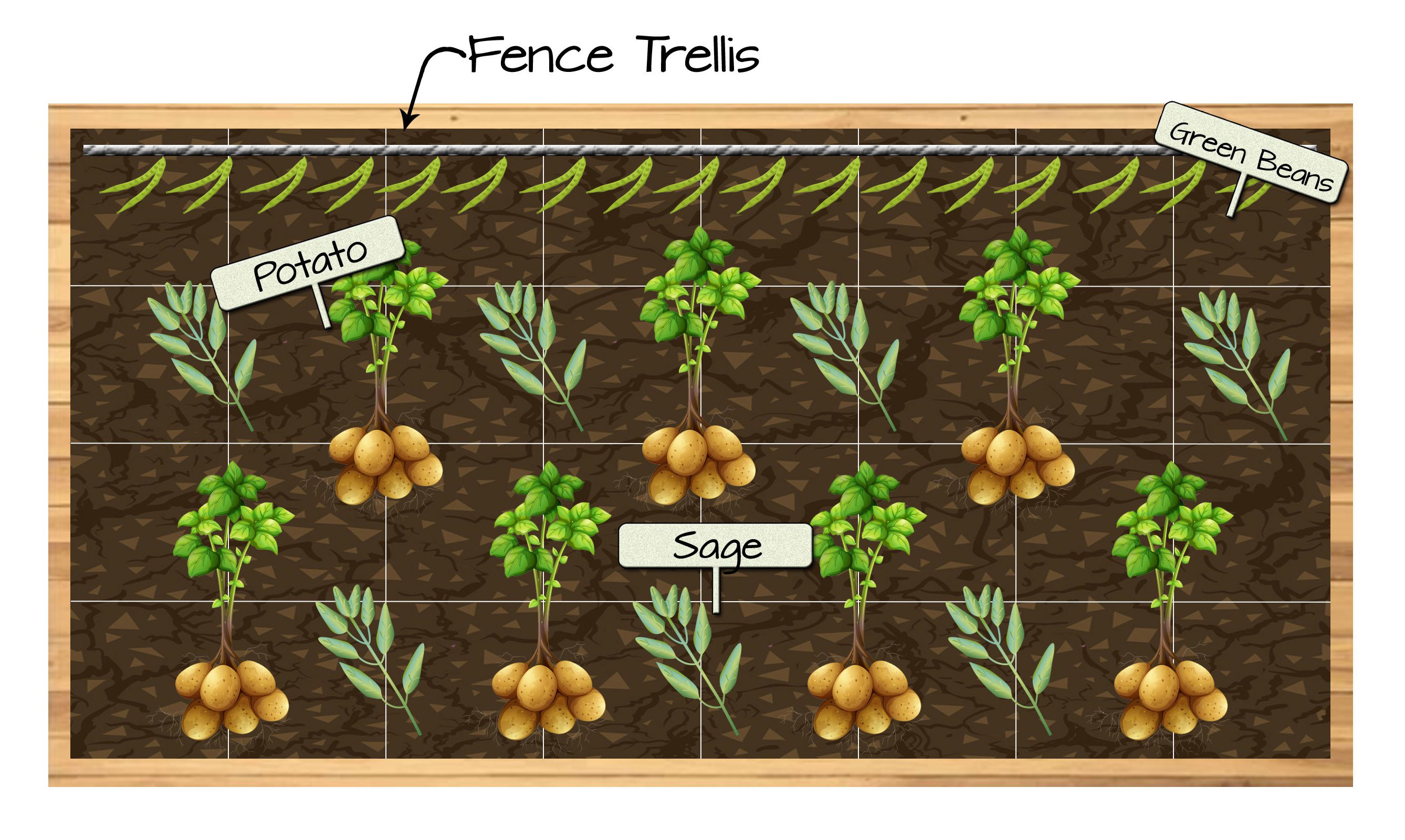
Raised Bed 14
- Potatoes
- Sage (perennial)
- Green beans
Time to Plan your Own Raised Bed Vegetable Garden
When I was first starting gardening, I wished someone would have shared a detailed raised bed vegetable garden plan like this. I hope this will help you in planning your food garden!
Get in depth look at how to build, maintain, and grow using this method in The Comprehensive Guide to Raised Bed Gardening!
If you’re looking for a large scale design you can apply to your entire property, check out Farm Layout Ideas: Site Plan Designs for Your Homestead.
Leave a comment with your gardening advice!
Plan your raised bed vegetable garden like a pro with these tools
-
Garden Design and Planning Tool
Original price was: $29.00.$19.00Current price is: $19.00. -

E-Book | Saving Vegetable Seeds
$3.00 -
Fall Gardening Checklist Free Printable
$0.00 -
Succession Planting Schedule Free Printable
$0.00

Explore more gardening articles . . .
- Unlock the Secrets to a Perfect Garden Layout! (A Reference Tool for Gardeners)
- Farm Layout Ideas: Site Plan Designs for Your Homestead.
- The Comprehensive Guide to Raised Bed Gardening
- Gardening 101: 9 Simple Steps to a Fantastic First Season!
- Chaos Gardening for Perpetual Harvests
- Best Gardening Books: Beginners to Masters
- Planning a Survival Garden for Food and Medicine
- Building a Climate Victory Garden to Regenerate Soil
- The Bare Soil Dilemma
- The Ultimate Guide to Planting an Herb Garden
- 90 Unique Spices to Grow in Your Herb Garden
- 75+ Side Hustles for Farmers to Boost Income
- My Passion for Permaculture (and how to apply it to your homestead)
- How to Make a Succession Garden Schedule
- Start your Garden Renovation: Budget and Planning Guide
- How to Build a DIY Outdoor Pizza Oven
- Tips for Garden Critter Control
- The Gardener’s Guide to Pest Insects
- Expert Tips for Gardening Safety
- How to Grow Tomatoes
- 30 Unique Heirloom Vegetables for your Food Garden
- How to Start Seeds Indoors and Keep Them Alive!
- The Secret World of Seeds: Ancient Knowledge
- How to Grow a Medicinal Tea Garden (Plus over 40 Plants!)
- Top 20 Flowers for a Cottage Garden
- 20 Perennial Flowers that Bloom all Summer
- Wildflower Cottage Garden Design
- 12 Culinary Herbs for the Flower Garden
- Learn to Pressure Can Veggies!
- 8 Ways to Preserve Your Harvest
- How to Harvest, Dry and Cure Cilantro
- Companion Planting: Cracking the Code
- Plant Friend or Foe: Companion Planting in the Vegetable Garden
- Most Wished for Gardening Accessories!
- Veggie Garden Supply List
Share this Post on Social Media!
For more inspiration, follow my Pinterest Board: Gardening, Growing Food, Landscaping.

I love seeing your plan, your layout/containers. My issue comes to when I’m trying to figure out what to plant next to each other or what grows better in what type of container..I love gardening but get so overwhelmed with where to put what I normally do in the ground gardening but really trying raised gardens to year with the hope of harvesting seeds etc.. Would love more advice on how we know what to plant where..
April, I think a lot of people have this question! It has taken years of researching and trial and error for me to figure this out. I would love to put together a post with all this information for you and anyone else who wants these answers.
I would love ideas, am in the planning stages of constructing raised garden
What a great plan!!! So many different beds for your veggie gardens! Good luck this season!
Thanks! It’s actually been a helpful reference for me while planting them!
Thank you so much.
This is the clearer plans I saw.
I’m a more than beginner town girl newly installes in country.
I am a visual learner and your help is priceless.
Thanks again.
I’m curious the thought process for building the trellis on the north side of the boxes. Like is there a reason/benefit? Please don’t read that as accusatory ? I’m genuinely curious why. This is all new to me. Thanks!
Yes, that is very intentional. Here in the northern hemisphere (I am in Michigan), we get the most direct sunlight from the south. By orienting the garden south, plants get the most amount of sunlight possible per day. The trellises on the north side of the garden beds cast a shadow on the paths behind them and not on the vegetables growing in front of them.
Can you tell me how tall your trills is? I want to put one up but am worried about blocking sun to my raspberries that are only about 3 ft behind my raised bed
My trellises are about 6 feet tall with 30 inch walkways in between raised beds. I don’t have any shading problems since the summer sun is so high in the sky.
Thanks so much for this lay out , going from traditional gardening to raised beds this year . I’ve always done companion planting and was wondering how different it would for raised beds . Good to read about the trellis in comments , here in NW Ohio would be about the same issue with sun and will make me think a bit more on my lay out . Again thank you for all your hard work !
HAPPY PLANTING ??BTW found you on Pinterest .
I love the visuals of the garden beds. I am just wondering if the number of veggies you have in the pictures is true to real life planting? It seems like it should be but when I went to plant in the same size, it seemed like too much. I am also wondering if you have any plans on fruits gardens. Thank you.
I am looking for something so similar to what you did and i need ideas. I am starting from scratch on a huge plot of land. Last yr we did potatoes, beans and melons (in mass quantity) now Ii want to do more plants and break it up to be a more permanent space and not do monoculture!!! I cannot seem to find anywhere that says how far apart to plant watermelon and pumpkin only that they cross pollinate. I see you appear to have 10 ft and want to ask if this is enough to keep the melon from tasting like pumpkins! I will be using this guide and want to dig farther into your web page! Thanks for your post! Jen